


Health, Safety, Security & Environment
Terminal safety is a set of habits written down and checked: permits before work, levels of concern on every tank, inspections on schedule and a response plan that has been drilled.
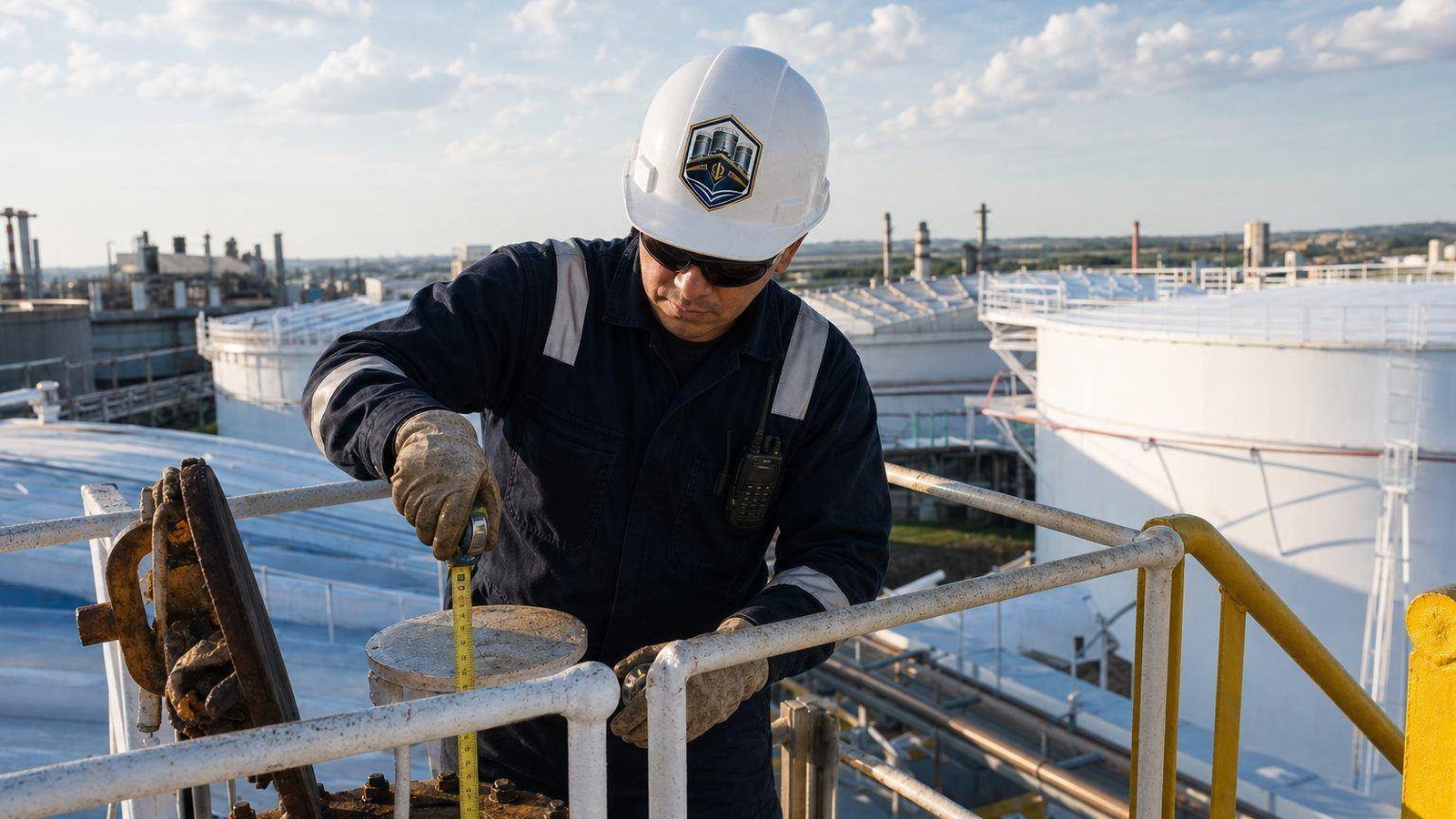
Bulk-liquid terminals hold large inventories of flammable and sometimes toxic product and move it at high rates between tanks, ships, barges, rail cars, trucks and pipelines. Serious incidents in this industry trace back to a short list of causes: an overfilled tank, hot work near vapor, a line opened without isolation, a corroded floor, a contractor who did not know the site. Our HSSE system is organized around those causes.
HSSE stands for health, safety, security and environment. We do not publish incident rates on this website. We describe what we do and the rules and standards it rests on, and verified customers and their vetting teams can examine the records behind it, from permits and inspection reports to drill logs and contractor audits.
Process safety where it applies
OSHA's Process Safety Management (PSM) standard, 29 CFR 1910.119, covers processes holding 10,000 pounds or more of flammable gas, or of flammable liquid with a flash point below 100 °F, in one location, as well as listed highly hazardous chemicals above their threshold quantities. It exempts flammable liquids stored in atmospheric tanks and kept below their normal boiling point without chilling or refrigeration, which describes much of a conventional tank farm. Pressurized LPG storage and some chemical service can fall inside it.
Where a process is covered, we apply every PSM element, including process hazard analysis, written operating procedures, mechanical integrity, management of change, pre-startup safety review, incident investigation and compliance audits. Where it is not, we apply the same disciplines to tank and transfer work, because the hazard does not read the exemption. For flammable-liquid storage, 29 CFR 1910.106 and NFPA 30 set the baseline for tank design, venting, spacing and diking.
Permit-to-work
No non-routine work starts on a CorEnergy site without a written permit. Hot work, confined-space entry, line breaking, excavation, work at height and electrical isolation each have their own permit, issued by an authorized person who has inspected the job site, and closed only when the area has been returned to a safe state.
Permits for the same area are cross-referenced, so conflicting work is visible before it starts. Isolations follow OSHA lockout/tagout, 29 CFR 1910.147. Tank entry follows the confined-space standard, 29 CFR 1910.146, and API Standard 2015 for safe entry and cleaning of petroleum storage tanks. Hot work follows API RP 2009, with gas testing before and during the job.
- Gas tests recorded on the permit before work and at set intervals
- Isolation points listed, locked, tagged and verified before a line is opened
- A standby attendant and a rescue plan for every confined-space entry
- Simultaneous operations reviewed when a dock, truck rack or tank transfer is live nearby
- Permit closed only after a walk-down with the issuer
Overfill prevention to API 2350
An overfill is the incident a terminal most needs to prevent, and API Standard 2350 is the framework we use to prevent it. Each tank is categorized by how it is attended and instrumented, and each has documented levels of concern: the critical high level, the high-high alarm level and the maximum working level, with response times between them calculated from the maximum receipt rate.
Receipts are planned against available ullage, the empty space left above the liquid, before a transfer starts. Where the standard calls for an independent high-high alarm, it is separate from the gauging system and proof-tested on a schedule. At the pre-transfer conference, the terminal and the shipping party agree the transfer rate, the topping-off sequence and how either side stops the flow.
Tank integrity to API 653
Tanks are built to API Standard 650 and kept fit for service under API 653. Our operators carry out documented routine in-service inspections at least monthly. An authorized API 653 inspector carries out formal external inspections at least every five years, or sooner where the corrosion rate demands it, and internal inspections at intervals set by measured floor and shell corrosion.
Findings drive repair, re-rating or removal from service, and every alteration is recorded against the tank's history. Cathodic protection follows API RP 651 and internal linings API RP 652. Breakout tanks on a regulated pipeline are inspected to API 653 as 49 CFR 195.432 requires, and the same records support integrity testing under the EPA SPCC rule.
Emergency response
Each site has a written emergency response plan covering fire, spill, vapor release, injury, severe weather and security threats, aligned with any facility response plan required under 40 CFR 112 or 33 CFR 154. It sets out who does what in the first hour, where foam, boom and sorbents are staged, and which fire services and oil spill removal organizations are called.
Responders are trained to the level their role requires under OSHA's emergency response standard, 29 CFR 1910.120. We exercise the plan with tabletop and equipment-deployment drills, following the National Preparedness for Response Exercise Program (PREP) where a response plan requires it, and keep the notification sequence current, from the site alarm to the National Response Center.
- Tank-fire pre-plans written with API RP 2021 as the reference
- Spill equipment staged at docks, truck racks and rail spurs
- Static and lightning protection to API RP 2003
- A review after every response and every reported near miss
Contractors and site security
Much of the hazardous work on a terminal, from tank cleaning to hot tapping, is done by contractors. We pre-qualify them on their safety program, training records, insurance and relevant experience before they bid, and once on site they work to our permits and rules, not their own. Every contractor worker completes a site orientation before starting.
Contractors in a PSM-covered process receive the hazard and procedure information that 29 CFR 1910.119(h) requires. Supervisors audit contractor work in the field and review performance after each job. At marine facilities under the Maritime Transportation Security Act, unescorted access to secure areas requires a Transportation Worker Identification Credential (TWIC).
Frequently asked questions
Do you publish safety statistics?
No. Incident rates out of context say little about the tank your product will sit in. Verified customers and their vetting teams can review our procedures, inspection records and audit findings directly, under a confidentiality agreement where needed.
Can our surveyor or vetting team attend a transfer?
Yes. Independent inspectors and customer representatives are welcome under our site rules. They complete the safety orientation, are escorted in operating areas and work within the same permit and transfer procedures that apply to everyone on site.
Who can stop a vessel transfer?
Either person in charge, terminal or vessel, at any time. The stop procedure is agreed at the pre-transfer conference and recorded on the Declaration of Inspection that 33 CFR 156 requires. Once flow stops, the terminal emergency plan governs the response ashore.
Related
Sustainability at the Terminal
Vapor control, leak detection, energy use and renewable-fuel handling, described as practice, not targets.
Read more
US Regulatory Framework
PHMSA, EPA, Coast Guard, OSHA, FMC and OFAC: the US rules behind our terminal and freight work.
Read more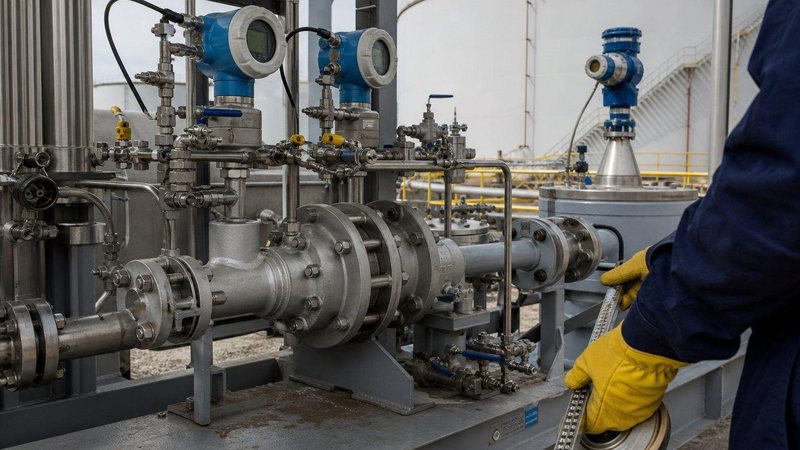
Custody Transfer Measurement
Tank gauging, meters and provers, sampling and volume correction to API MPMS standards.
Read more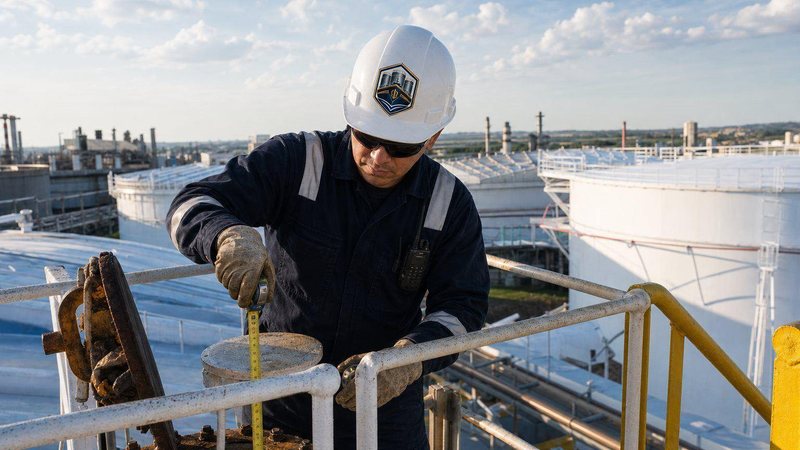
Tank Gauging: Reading the Numbers
Innage, ullage, ATG and manual gauges, and a worked opening and closing gauge report.
Read moreVetting a terminal for your cargo?
Verified customers can request our HSSE procedures, inspection summaries and response-plan details through the desk.