


Tank Leasing: How Storage Deals Work
A tank lease is a bundle of rights: capacity, throughput, services and a measurement regime. This guide explains the main structures, the fee lines and the clauses that decide what you really pay.
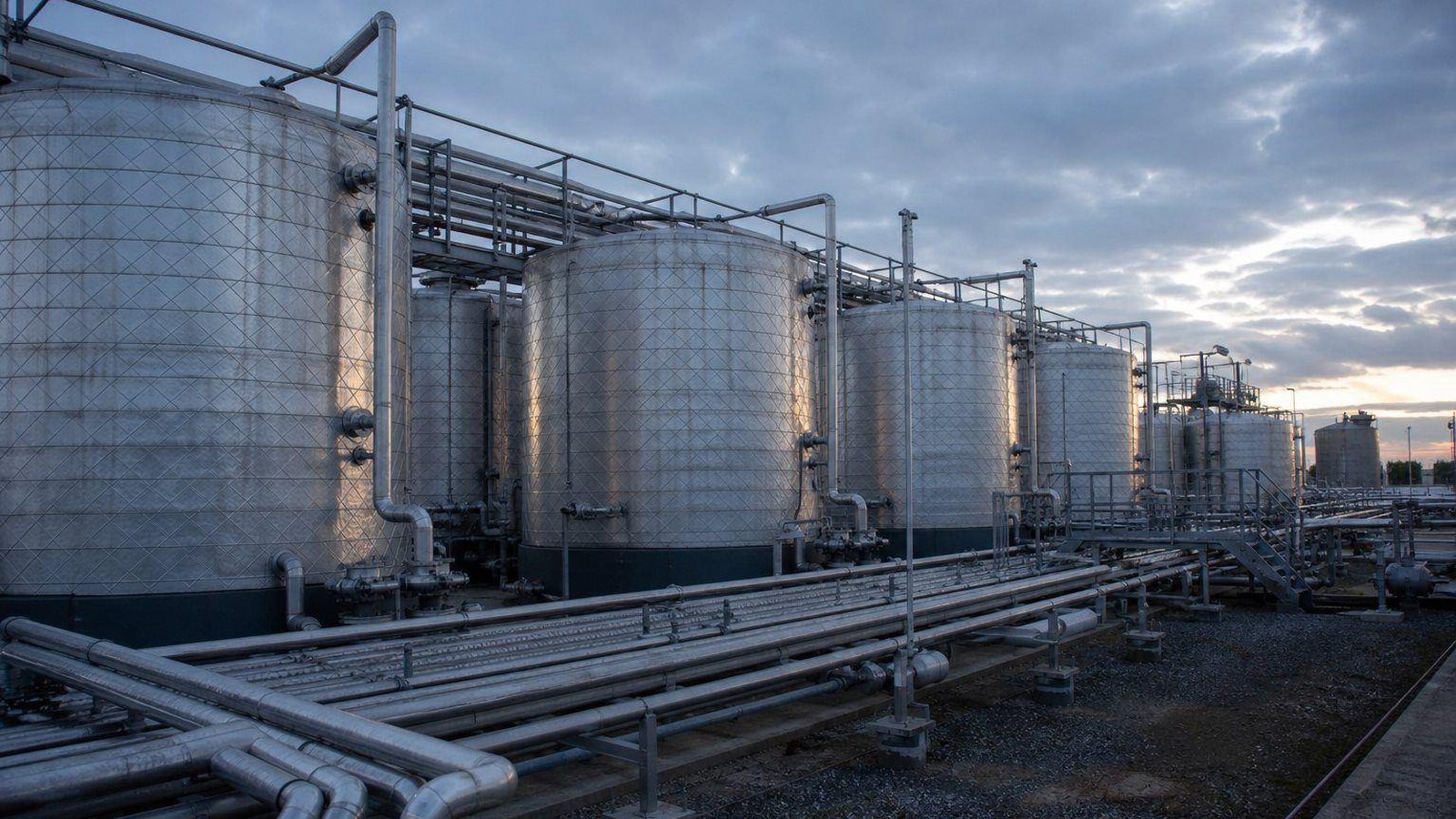
Storing product in someone else's tank looks simple: you pay rent and they hold the barrels. In practice a Tank Storage Agreement (TSA) defines far more than a price per barrel. It sets which tanks you may use, whether your product stays segregated, how often you may fill and empty them, which services are included, how quantities are measured and who bears losses.
Two offers with the same headline rate can cost very different amounts once those terms are counted. We write TSAs for crude oil, refined products, chemicals and renewables, and the same questions come up every time. This guide sets out the standard structures in the trade, the fee lines you should expect to see, and the storage arithmetic traders run when the forward curve is in contango.
Three ways to take storage
Most leases fall into one of three structures. The right one depends on how long you need the space, how sensitive your product is to contamination and how often it moves. Many agreements blend elements of more than one, for example dedicated tanks with a throughput allowance attached.
| Structure | How it works | Suits |
|---|---|---|
| Dedicated (segregated) tanks | You lease whole tanks for a term; only your product goes in them | Specification-sensitive grades, blending programs, longer positions |
| Commingled (fungible) storage | Your barrels share a tank with other owners' product of the same specification; you own a volume, not a tank | Standard grades moving through a hub, smaller parcels |
| Throughput agreement | You pay per barrel received and delivered, often against a minimum annual volume | Steady flows such as rack supply or pipeline-to-ship movements |
Take-or-pay and the fee lines
Term leases are usually take-or-pay: you pay for the capacity reserved whether you use it or not, and the terminal commits to keep it available. The rate is normally quoted per barrel or per cubic meter per month and often includes a set number of turns. A turn is one full fill-and-empty cycle; movement beyond the included turns is charged as excess throughput.
- Storage fee: per barrel or m³ per month, payable on take-or-pay terms
- Excess throughput: per barrel moved above the included turns
- Heating: for products kept above their pour point, often charged on energy used
- Blending, additive injection and circulation: per operation or per barrel
- Tank cleaning: at the end of the term or on a change of grade
- Inter-tank transfers, sampling and access for third-party inspectors
- Losses: an agreed allowance, with the TSA stating who bears anything above it
Shell capacity versus working capacity
Rates are often quoted on shell capacity, the tank's full nominal volume. You cannot use all of it. The heel below the outlet stays in the tank, and the top of the tank is held free as safety ullage so the overfill-prevention levels set under API 2350 have room to work. What remains is working capacity, the number that decides how much product you can actually hold.
In floating-roof tanks the roof sets a practical floor as well, since terminals avoid landing the roof on its legs in normal operation. Ask for working capacity tank by tank, and ask whether the heel is yours, the terminal's, or a shared commingled bottom.
Worked example: the contango carry
When prompt prices sit below forward prices, a market structure called contango, a trader can buy now, store and sell forward. The trade works only if the spread covers the full cost of carry. The figures below are hypothetical, exist only to show the arithmetic and are not a quote of our rates.
| Item, per barrel, three-month hold | Hypothetical figure |
|---|---|
| Forward spread earned: month-three price minus prompt price | $2.40 |
| Storage fee: $0.45 per barrel per month on working capacity | -$1.35 |
| Financing the cargo value for three months | -$0.55 |
| Insurance, inspection and handling | -$0.15 |
| Allowance for measurement losses | -$0.05 |
| Net carry before tax and overheads | $0.30 |
Clauses worth reading twice
None of these points is exotic, and a well-drafted TSA answers each of them before the first barrel arrives. Read them alongside the sale contracts the stored product will serve, so that the measurement basis and the loss tolerance match from purchase, through storage, to final sale.
- Measurement basis: whose gauges or meters govern, which API MPMS tables apply, and the inspector's role
- Loss allowance: per receipt, per delivery or per year, and how it is calculated
- Specification: the terminal's right to refuse off-spec receipts and who pays for testing
- Title and liens: whether the terminal may hold product against unpaid charges
- Storage receipts: who may receive them and how a transfer of title is recorded
- Outages: force majeure, inspection downtime and substitute capacity
- End of term: final gauging, treatment of the heel and cleaning
How it works
- 1Inquiry
Product, specification, volume, period and expected movements by mode.
- 2KYC
We verify the counterparty before sharing tank-specific terms or documents.
- 3Offer and TSA
Tanks, rates, services, measurement basis and losses agreed in writing and signed.
- 4Tank preparation
Inspection, cleaning or line-up as the grade requires, witnessed if you wish.
- 5First receipt
Opening gauge, transfer and closing gauge; your allocation then shows in the Buyer / Receipt-Holder Portal.
Frequently asked questions
How long are typical lease terms?
They range from a few months for opportunistic positions to several years for supply programs. Longer commitments generally secure specific tanks and firmer terms; short terms are more often commingled or drawn from whatever capacity is free at the time.
Can I see which tanks are available?
Yes. Tank-Farm Availability shows which tanks are free, reserved or booked, with days and price. Specific terms are confirmed in a written offer and become binding only when the Tank Storage Agreement is signed.
Who owns the heel?
It depends on the agreement. In a dedicated tank the heel is often the customer's own product, returned or settled at the end of the term. In commingled storage it may be a shared bottom. The TSA should say which, and how it is measured on exit.
Do you store products that need heating?
Yes. Heavy fuel oil, bitumen, some crude oils and many vegetable oils must be kept above their pour point to stay pumpable. Heating is set out as a separate fee line, and the target temperature range is agreed in the TSA.
Related
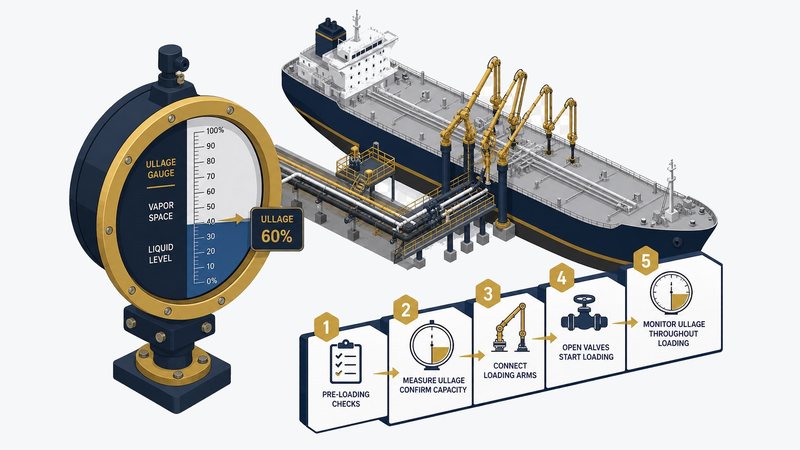
Throughput Agreements
Throughput fees, take-or-pay, excess throughput and the nomination cycle explained.
Read more
Tank & Line Heating
Steam, thermal oil and heat tracing for viscous products, with logged temperatures and clear pricing.
Read more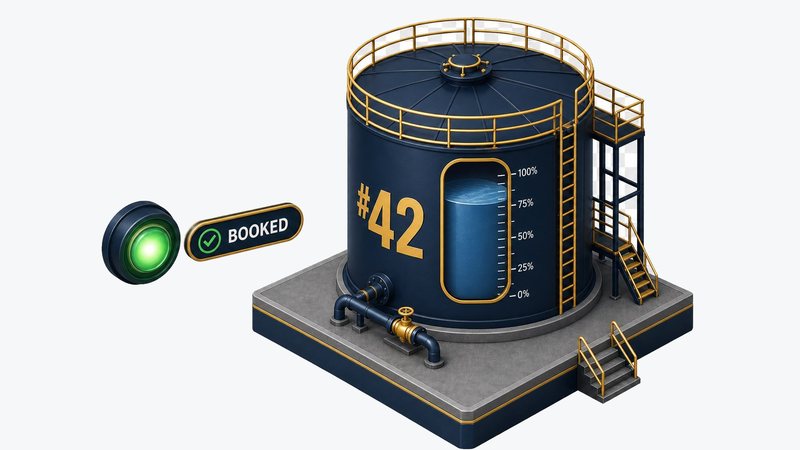
Tank-Farm Availability
Which tanks are free, reserved or booked, with days and price, and each tank farm on a map.
Read more
Custody Transfer, Explained
From TOV to NSV to metric tons: the quantity chain behind every invoice, with a worked example.
Read moreNeed storage for a position?
Tell us the product, volume, period and modes. After KYC we will come back with available tanks and a draft TSA.