


Fujairah
The Middle East bunkering and storage hub, on the Gulf of Oman outside the Strait of Hormuz. We arrange tank capacity, ship-to-ship transfers, freight and inspection there.
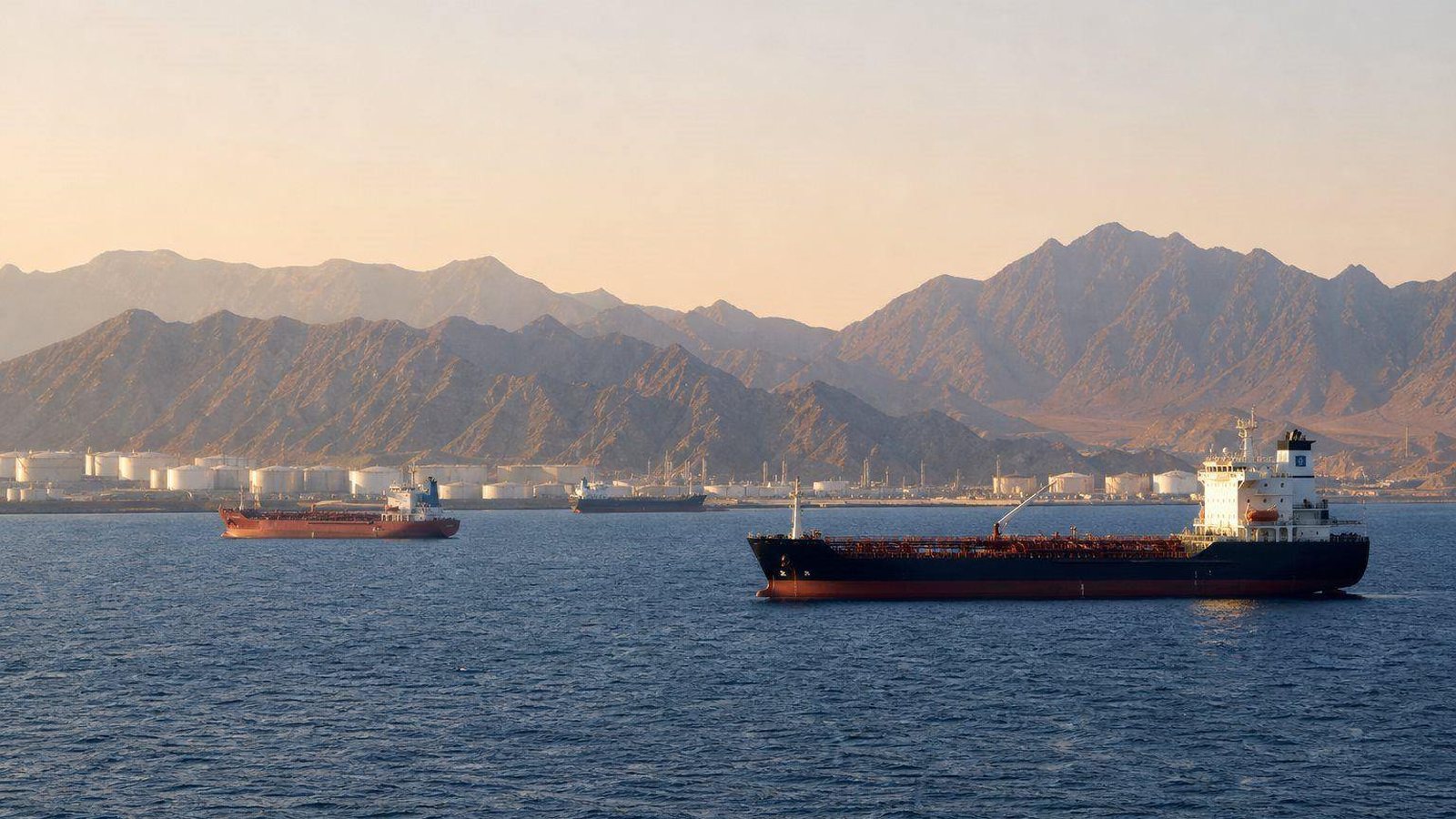
Fujairah lies on the east coast of the United Arab Emirates, facing the Gulf of Oman. Ships can call there without passing through the Strait of Hormuz, the narrow channel that carries much of the world's seaborne crude. That single fact explains the port's growth into one of the largest bunkering and oil storage hubs in the world, centered on the Fujairah Oil Industry Zone.
Fujairah is also linked to Abu Dhabi's oil fields by the Habshan-Fujairah crude pipeline, which lets Murban crude reach the sea without a Hormuz transit, and Murban futures deliver FOB Fujairah. We arrange third-party storage in the zone, ship-to-ship transfers at the anchorage, regional freight and independent inspection, and we track every movement from arrival to release.
Why ships and traders use Fujairah
Tankers leaving the Arabian Gulf pass Fujairah on their way to Asia, East Africa and Europe, and ships of every type bunker there before long voyages. The zone stores fuel oil, gasoil, jet, gasoline and naphtha. Weekly inventory figures for light distillates, middle distillates and heavy residues are published and watched as a gauge of regional supply.
Traders use Fujairah storage to hold cargoes for timing, blend fuel oil to bunker specification and break large cargoes into regional parcels. The anchorage supports ship-to-ship transfers, floating storage and bunker deliveries, so a single cargo can be received, blended and redistributed without leaving the area.
Typical vessel classes at Fujairah
The anchorage sees every size of tanker, from VLCCs loading crude to small bunker tankers supplying ships at anchor. Product flows from Fujairah to East Africa, South Asia and the Red Sea often move on LR1 and MR tankers; long-haul naphtha and distillates to Asia favor LR2s.
| Class | Typical size | Typical Fujairah use |
|---|---|---|
| VLCC | 200,000-320,000 dwt | Murban and other crude loadings |
| LR2 | 80,000-160,000 dwt | Naphtha and distillates to Asia |
| LR1 | 55,000-80,000 dwt | Products to East Africa and South Asia |
| MR | 25,000-55,000 dwt | Regional product distribution |
| Bunker tanker | Sized to the port service | Fuel deliveries to ships at anchor |
Security and insurance
The waters around the Strait of Hormuz carry a higher security risk than most trading routes, and the risk changes with regional events. Underwriters may treat calls as falling within listed areas that require notice and an additional war-risk premium. Owners commonly report to UK Maritime Trade Operations (UKMTO) while in the region.
What we arrange in Fujairah
We source tank capacity in the Fujairah Oil Industry Zone for fuel oil, distillates and light products, and plan blending where a cargo needs to meet a bunker or export specification. We fix tankers for inbound and outbound parcels, plan STS transfers at the anchorage, appoint independent inspectors at each custody transfer and keep the movement on one tracking number.
How it works
- 1Agreement first
KYC is completed and a Tank Storage Agreement is signed before any tank is allocated or any product moves.
- 2Arrival and NOR
The ship tenders its Notice of Readiness, the master's formal notice that it is ready to discharge. Laytime starts as the charter party provides.
- 3Discharge and measure
The inspector gauges shore tanks before and after, compares them with ship figures and samples the receipt.
- 4Store and blend
Product is held, blended or tested as instructed, with inventory recorded against your allocation.
- 5Release
On your release order, product loads to a ship, transfers STS or goes to bunker tankers, measured again at each step.
Frequently asked questions
Why store in Fujairah rather than inside the Gulf?
Fujairah avoids a Hormuz transit for ships that only need storage, bunkers or a cargo split. That saves sailing time and can reduce exposure to the security risks and insurance costs of the inner Gulf.
What is Murban and why does Fujairah matter to it?
Murban is a light crude from Abu Dhabi. It reaches Fujairah by the Habshan-Fujairah pipeline, and ICE Futures Abu Dhabi Murban futures are physically delivered FOB Fujairah.
Can you arrange ship-to-ship transfers at Fujairah?
Yes. We plan STS transfers at the anchorage with the owners, the port and an STS service provider, following OCIMF guidance and each ship's STS operations plan, with an inspector measuring both vessels.
Related
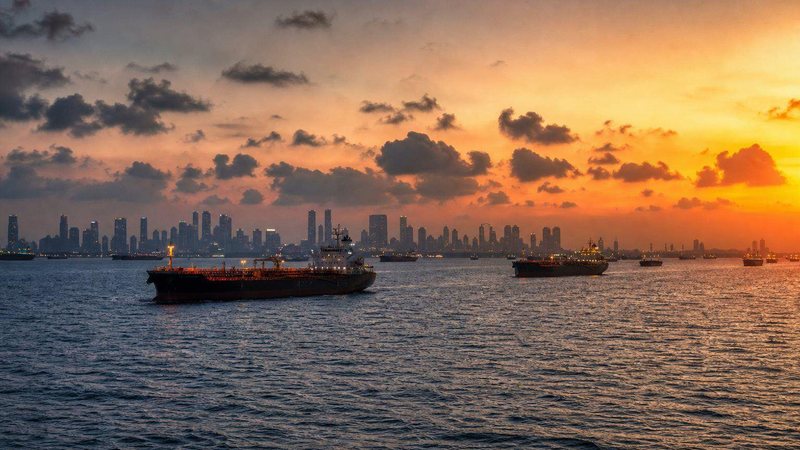
Singapore
Bunkering, storage and product cargoes in Asia's main oil hub, with independent inspection.
Read more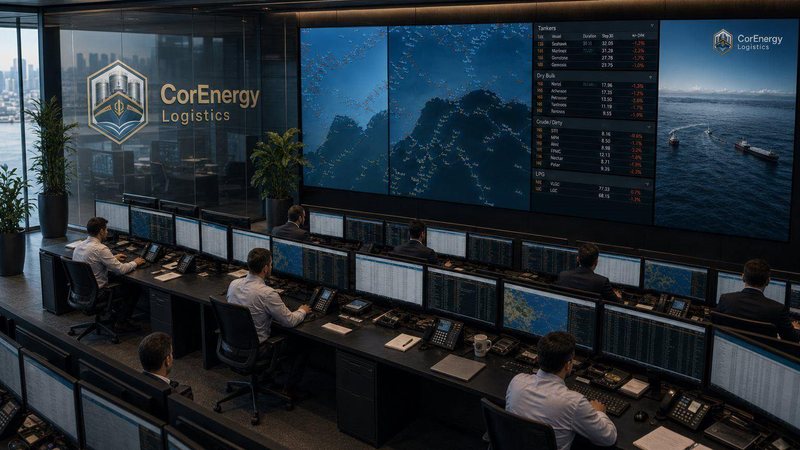
Chartering Desk
Voyage, time charter and COA fixtures, Worldscale freight, laytime and demurrage handled end to end.
Read more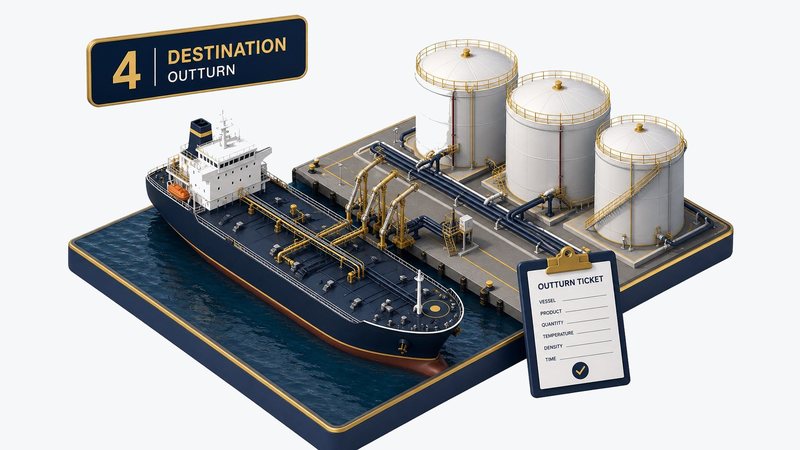
Laytime and Demurrage, Explained
NOR, laytime, demurrage and despatch, with a worked tanker claim using hypothetical figures.
Read more
Refined Products Storage
Gasoline blendstocks, ULSD and jet fuel on segregated systems, with dye and additive injection.
Read morePlan a Fujairah call
Send product, quantity, laycan and whether you need storage, STS or freight. We will come back with a plan and the risks to price in.