


Incoterms 2020 for Bulk Liquids
Incoterms decide where delivery happens and when risk passes from seller to buyer. For bulk liquids four rules do most of the work, and a fifth, DES, still turns up in contracts long after it was withdrawn.
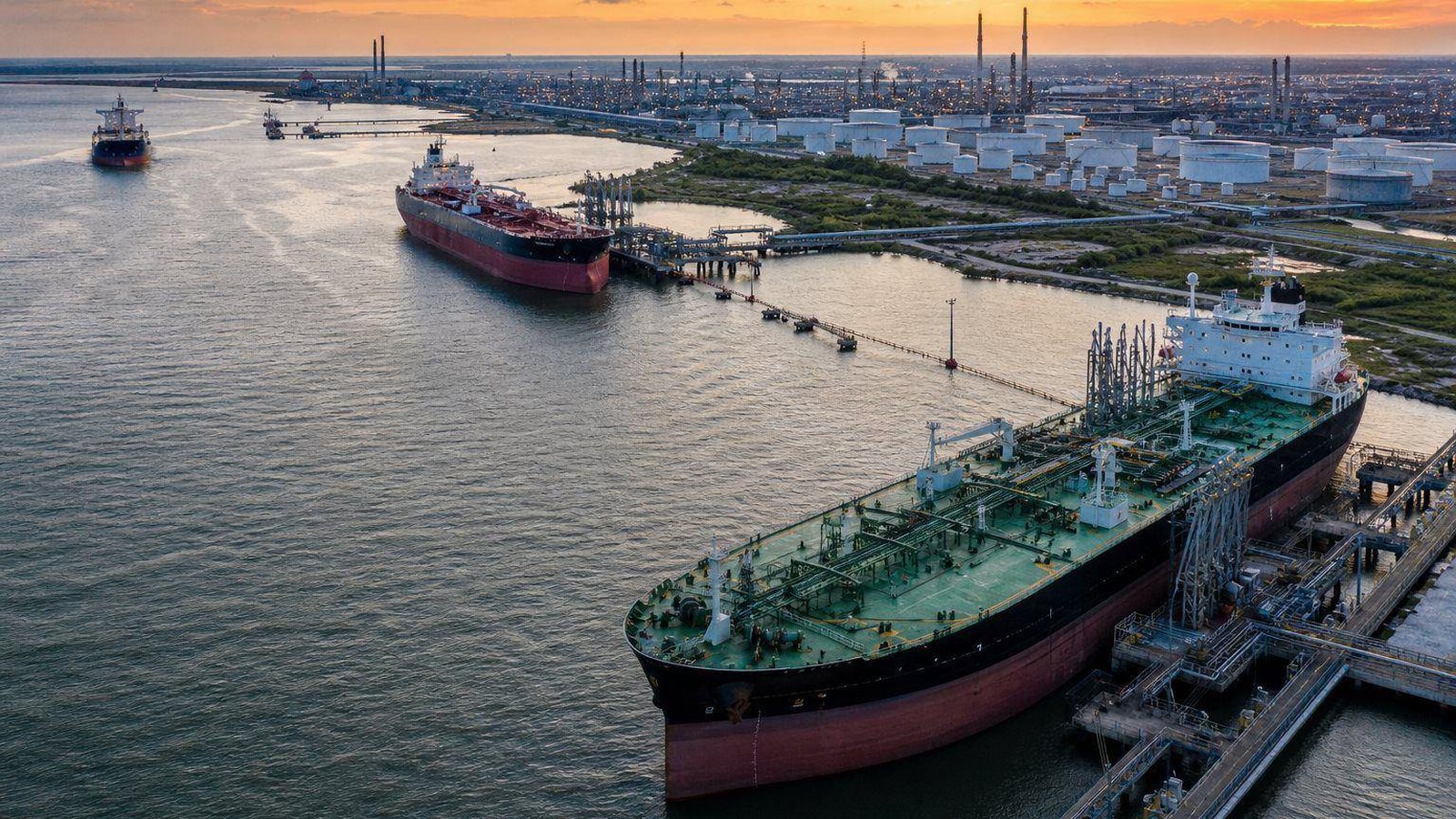
Incoterms are rules published by the International Chamber of Commerce (ICC) that set out the delivery obligations of seller and buyer: where delivery takes place, when risk passes, who arranges and pays for carriage and insurance, and who handles export and import clearance. The current edition is Incoterms 2020. A rule applies only if the contract incorporates it, ideally naming the rule, the place and the edition, as in "CIF Rotterdam Incoterms 2020".
Of the eleven rules, four are reserved for sea and inland waterway transport: FAS, FOB, CFR and CIF. The other seven work for any mode. Oil, chemical and renewable fuel cargoes trade mostly on FOB, CFR, CIF and DAP, usually with an oil-industry set of general terms and conditions alongside to fill the gaps that Incoterms deliberately leave open.
The rules that matter for liquid cargoes
The table summarizes each rule as the trade uses it for tanker and barge cargoes. Keep risk and cost apart: under CFR and CIF the seller pays freight all the way to the destination, yet risk has already passed to the buyer at the load port. FCA and DDP appear less often but are useful for pipeline, rail and truck deliveries.
| Rule | Delivery and risk transfer | Freight | Insurance |
|---|---|---|---|
| FOB (Free On Board) | On board the vessel at the named load port | Buyer charters and pays | Buyer, if it wants cover |
| CFR (Cost and Freight) | On board the vessel at the load port | Seller, to the named destination port | Buyer, if it wants cover |
| CIF (Cost, Insurance and Freight) | On board the vessel at the load port | Seller, to the named destination port | Seller, minimum Institute Cargo Clauses (C) |
| DAP (Delivered at Place) | At the named destination, on the arriving vessel, ready for unloading | Seller | No duty either way; seller carries the risk until delivery |
| FCA (Free Carrier) | Handed to the buyer's carrier at the named place | Buyer | Buyer, if it wants cover |
| DDP (Delivered Duty Paid) | At the named destination, cleared for import | Seller | No duty either way; seller carries the risk until delivery |
From the ship's rail to on board
Incoterms 2000 placed the risk point for FOB, CFR and CIF at the ship's rail. Incoterms 2010 replaced it with delivery on board the vessel, and Incoterms 2020 kept that wording. The change retired the old picture of risk passing as cargo crossed an imaginary vertical line above the rail, which never suited liquids pumped aboard through a hose or loading arm.
Oil-industry general terms and conditions often go further and define the exact point as the vessel's permanent hose connection at the loading manifold. Under that wording the product is at the seller's risk until it passes the flange where the shore hose or loading arm meets the ship's piping. If a contract still says "ship's rail", it is drawing on an older edition or a company form, and you should know which one.
What happened to DES
DES (Delivered Ex Ship) and DEQ (Delivered Ex Quay) were Incoterms 2000 rules. Incoterms 2010 withdrew them, together with DAF and DDU, and introduced DAP and DAT. Incoterms 2020 then renamed DAT as DPU (Delivered at Place Unloaded). For a cargo delivered on board the arriving vessel at the discharge port, DAP is the closest current equivalent of DES.
DES survives in oil and gas trading because many term contracts and company terms were drafted around it. That works only if the contract says what DES means, either by expressly incorporating Incoterms 2000 or by defining delivery, risk and title in its own general terms. A bare "DES" paired with "Incoterms 2020" is a contradiction that invites a dispute.
B/L quantity or outturn quantity
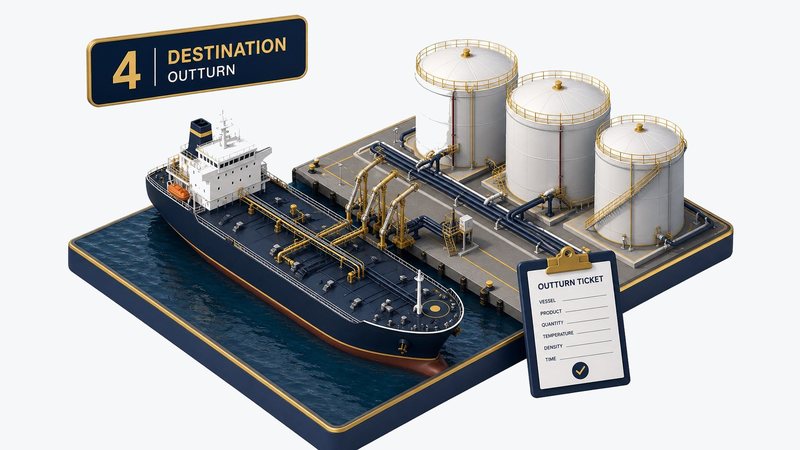
Incoterms say nothing about how much was delivered. In FOB, CFR and CIF sales the invoice is normally based on the bill of lading (B/L) quantity determined at the load port, because that is where delivery happened. Delivered sales on DAP or DES terms are often invoiced on outturn, the quantity measured into shore tanks at discharge.
Some contracts split the difference: a provisional invoice on the B/L figure, then final settlement on outturn within an agreed tolerance. Whichever basis you choose, it should match the measurement clause and the inspector's instructions, or the certificate you receive will not answer the question the invoice asks.
What Incoterms do not cover
Incoterms are narrower than many people assume. They allocate delivery, risk, carriage, insurance and clearance duties and very little else. Everything in the list below has to be written into the sale contract itself, or into the general terms and conditions that the contract incorporates by reference.
- Transfer of title, or property, in the goods
- Price, payment terms and documentary credits
- Quantity and quality determination, and the choice of inspector
- Laytime and demurrage between seller and buyer
- Breach, remedies, force majeure and governing law
- Sanctions, export controls and compliance warranties
A note on US domestic "FOB"
In US domestic trade, terms such as "FOB origin" and "FOB destination" are often read under the Uniform Commercial Code rather than Incoterms, and pipeline and rack sales use their own terms entirely. When a contract could be read either way, state "Incoterms 2020" expressly so that there is no doubt which set of meanings the parties intended.
Frequently asked questions
Under CIF, can the buyer claim against the seller for cargo damaged at sea?
Usually not under the sale contract, because risk passed when the cargo went on board at the load port. The buyer looks instead to the insurer under the policy the seller must procure and provide, and to the carrier under the bill of lading.
Is DAP the same as DES?
Close, but not identical. Both deliver on the arriving vessel at the destination, ready for unloading, with risk staying with the seller until then. DES was defined by Incoterms 2000 and DAP by Incoterms 2010 and 2020, so costs, notices and clearance duties should be checked against the edition named.
Which term fits product sold while it sits in a terminal tank?
Incoterms are often not used for that. Parties already holding product at a terminal commonly trade by in-tank transfer: the contract defines delivery as a transfer recorded by the terminal, with title passing at a stated time and the terminal's records as evidence.
Who books the vessel under FOB?
The buyer. It nominates a vessel acceptable to the load terminal within the agreed laycan, and the seller must have the cargo ready. Vessel acceptance, vetting and terminal compatibility are normally handled in separate nomination clauses of the contract.
Related
Laytime and Demurrage, Explained
NOR, laytime, demurrage and despatch, with a worked tanker claim using hypothetical figures.
Read more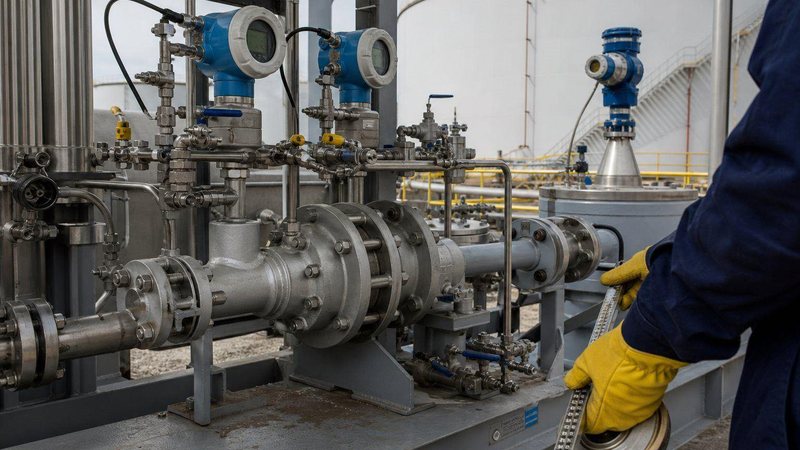
Custody Transfer, Explained
From TOV to NSV to metric tons: the quantity chain behind every invoice, with a worked example.
Read more
Chartering Desk
Voyage, time charter and COA fixtures, Worldscale freight, laytime and demurrage handled end to end.
Read more
Marine Tanker Freight
Tanker size classes, SIRE 2.0 vetting and Jones Act rules, matched to your parcel and both berths.
Read moreStructuring a delivered cargo?
Our chartering desk can price freight for CFR, CIF and DAP sales and align laytime terms with your sale contract.