


US Regulatory Framework
A bulk-liquid terminal answers to several federal agencies at once, plus state and local regulators. This is the framework we work within and how it shapes what we will and will not do.

CorEnergy is a US company. Our storage, transfer and freight work sits under overlapping federal regimes: pipeline and hazardous-materials safety under the Department of Transportation, spill prevention and air rules under the EPA, marine transfer operations under the US Coast Guard, workplace safety under OSHA, and economic sanctions administered by the Treasury's Office of Foreign Assets Control (OFAC). States and local authorities add permits of their own.
Which rules apply depends on the asset and the movement: a breakout tank on a regulated pipeline, a dock that transfers oil to vessels, a rail car of crude, a truck of diesel. The summary below explains the framework. It is not legal advice, and it does not replace the site-specific permits and plans each operation holds.
Pipelines and hazardous materials: PHMSA
The Pipeline and Hazardous Materials Safety Administration (PHMSA) regulates hazardous-liquid pipelines under 49 CFR Part 195, which covers design, construction, operation, integrity management and the breakout tanks that serve a regulated pipeline. Onshore oil pipelines also need response plans under 49 CFR Part 194.
Hazardous materials moving by rail, road, water or air fall under the Hazardous Materials Regulations, 49 CFR Parts 171 to 180: classification, packaging, hazard communication, shipping papers, emergency response information and training. Tank cars must meet the specifications in Part 179, including the DOT-117 design for flammable liquids, and highway carriers also work to the Federal Motor Carrier Safety Regulations.
Spill prevention and environment: EPA
The EPA's Spill Prevention, Control, and Countermeasure (SPCC) rule, 40 CFR Part 112, applies to facilities with more than 1,320 gallons of aboveground oil storage that could reasonably discharge to navigable waters. At terminal scale it requires a plan certified by a professional engineer, secondary containment, integrity testing of bulk storage containers, inspections and training. Facilities that could cause substantial harm also need a facility response plan under the same Part.
Clean Air Act permits govern tank and loading emissions, including storage-vessel standards in 40 CFR Part 60 and gasoline-distribution standards in Part 63. Fuel quality and product transfer documents fall under 40 CFR Part 1090, and renewable fuels carry Renewable Fuel Standard obligations. Where a listed substance exceeds its threshold quantity, the Risk Management Program in 40 CFR Part 68 also applies.
Marine transfer facilities: US Coast Guard
Docks that transfer oil or hazardous material in bulk to or from vessels are regulated under 33 CFR Part 154, which covers the facility operations manual, transfer equipment, marine vapor control systems and facility response plans. Transfers themselves fall under 33 CFR Part 156: a pre-transfer conference, a signed Declaration of Inspection, qualified persons in charge on both sides, and communications that let either side stop the flow.
Marine terminals that receive vessels covered by the Maritime Transportation Security Act also need a facility security plan under 33 CFR Part 105, with Transportation Worker Identification Credential (TWIC) controls on access to secure areas. Waterborne movements between two US points must use vessels qualified for the coastwise trade under the Jones Act, 46 U.S.C. 55102.
Workplace safety and ocean shipping: OSHA and FMC
OSHA standards apply on every site: 29 CFR 1910.106 for flammable liquids, 1910.119 process safety management where a process is covered, 1910.120 for emergency response, 1910.146 for confined spaces and 1910.147 for lockout/tagout. Hazard communication under 1910.1200 governs the safety data sheets and labels that travel with each product. Our HSSE page explains how we apply these standards.
The Federal Maritime Commission oversees common carriers and ocean transportation intermediaries in US foreign trade under the Shipping Act. Ocean tramps and chemical parcel tankers are outside its definition of a common carrier, and bulk cargo is exempt from tariff publication. Where an arrangement brings a movement within FMC jurisdiction, for example packaged or ISO-tank cargo, we confirm the licensing position under 46 CFR Part 515 before quoting.
Sanctions: OFAC screening
As a US company, CorEnergy complies with the sanctions programs administered by OFAC. We do no business involving comprehensively sanctioned jurisdictions or their governments, such as Cuba, Iran, North Korea and the Crimea, Donetsk and Luhansk regions of Ukraine, and we do not store, move or broker cargo originating from or destined for them.
Every counterparty, beneficial owner, bank, vessel, registered owner, manager and port in a transaction is screened against the Specially Designated Nationals and Blocked Persons (SDN) List and other OFAC lists before we commit, and again before cargo moves or payment is made. Entities owned 50 percent or more by blocked persons are treated as blocked even when they are not named.
- Vessel checks for AIS gaps, ship-to-ship transfers in high-risk areas and recent flag or name changes
- Russia-related restrictions on Russian-origin crude oil and petroleum products applied where relevant
- Screening repeated whenever a party, vessel, bank or route changes
- Possible matches escalated to compliance before anything proceeds
- Blocked or rejected transactions reported to OFAC within the required time
State and local requirements
States add their own layers: air permits, stormwater permits under the National Pollutant Discharge Elimination System, state spill and tank programs, fire codes adopted from NFPA 30, and local zoning. Emergency planning and chemical inventory reporting under the Emergency Planning and Community Right-to-Know Act also run through state and local bodies. These requirements vary by site and are held at site level.
Frequently asked questions
Do you screen vessels as well as companies?
Yes. We screen the vessel, its registered owner, manager and operator, and its recent trading pattern, including AIS gaps and ship-to-ship transfers in high-risk areas. A vessel that cannot be cleared is not nominated, whatever the commercial terms.
Can you handle non-sanctioned cargo for a buyer in a sanctioned jurisdiction?
No. We do no business involving comprehensively sanctioned jurisdictions or their governments, whatever the product. For other countries the answer depends on the parties, the program and any applicable license, and we confirm it with counsel before we commit.
Does the Jones Act affect my barge or tanker quote?
It can. A waterborne movement between two US points must use a vessel qualified for the coastwise trade, which affects availability and rates. A movement between a US port and a foreign port is not restricted in the same way.
Is this page legal advice?
No. It describes the framework we operate within. Your own obligations as shipper, consignee or cargo owner depend on your role and the movement, and you should confirm them with your own advisers.
Related
Integrity & Fraud Prevention
How advance-fee oil-trade fraud works, what we never do, and how to verify a CorEnergy document.
Read more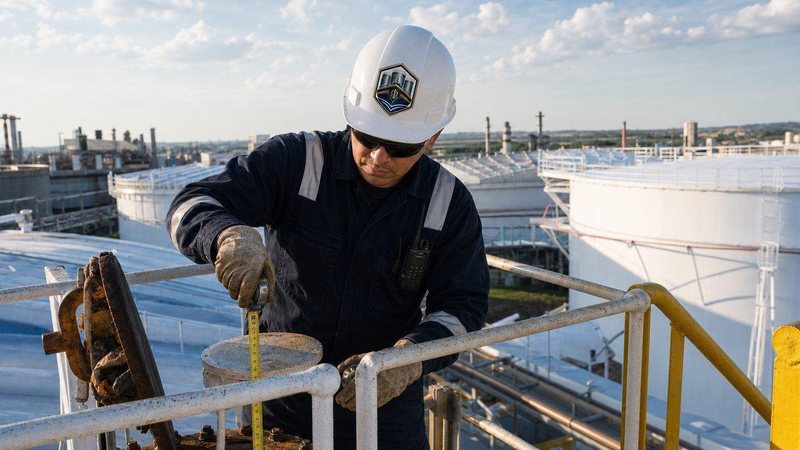
Health, Safety, Security & Environment
Process safety, permit-to-work, overfill prevention, tank inspection, emergency response and contractors.
Read more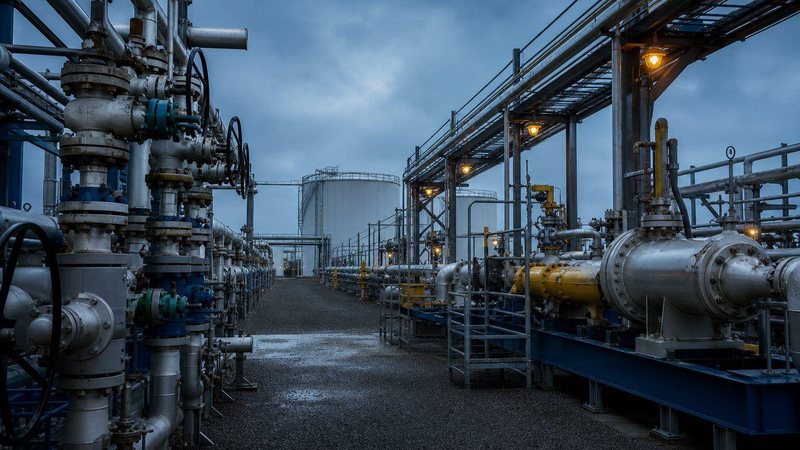
Pipeline Shipments
Common-carrier pipelines, FERC tariffs, nominations, batching and metered custody transfer.
Read more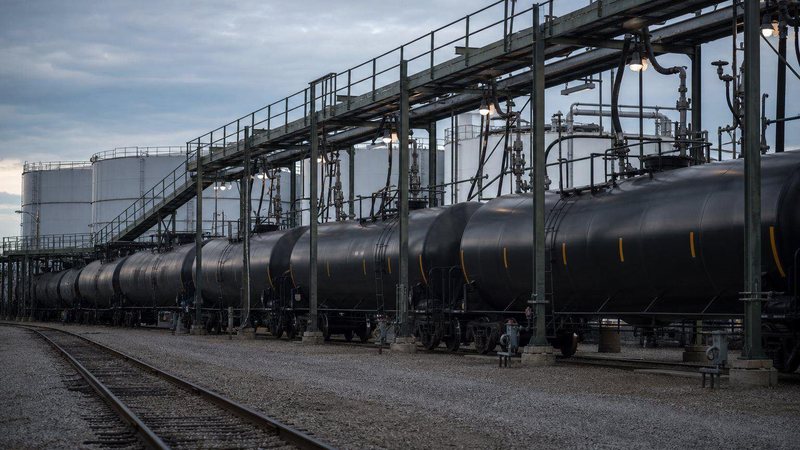
Rail Tank Car Transport
DOT-117 tank cars, unit trains, manifest service and transloading for crude, products and renewables.
Read moreHave a compliance question about a movement?
Send the product, route and parties, and we will tell you what screening and documents we need before we quote.