


Storage and Freight for Trading Houses
Traders pay for optionality: tankage that can be booked fast, blended in, transferred in tank and emptied on a short laycan, under terms that keep positions private.
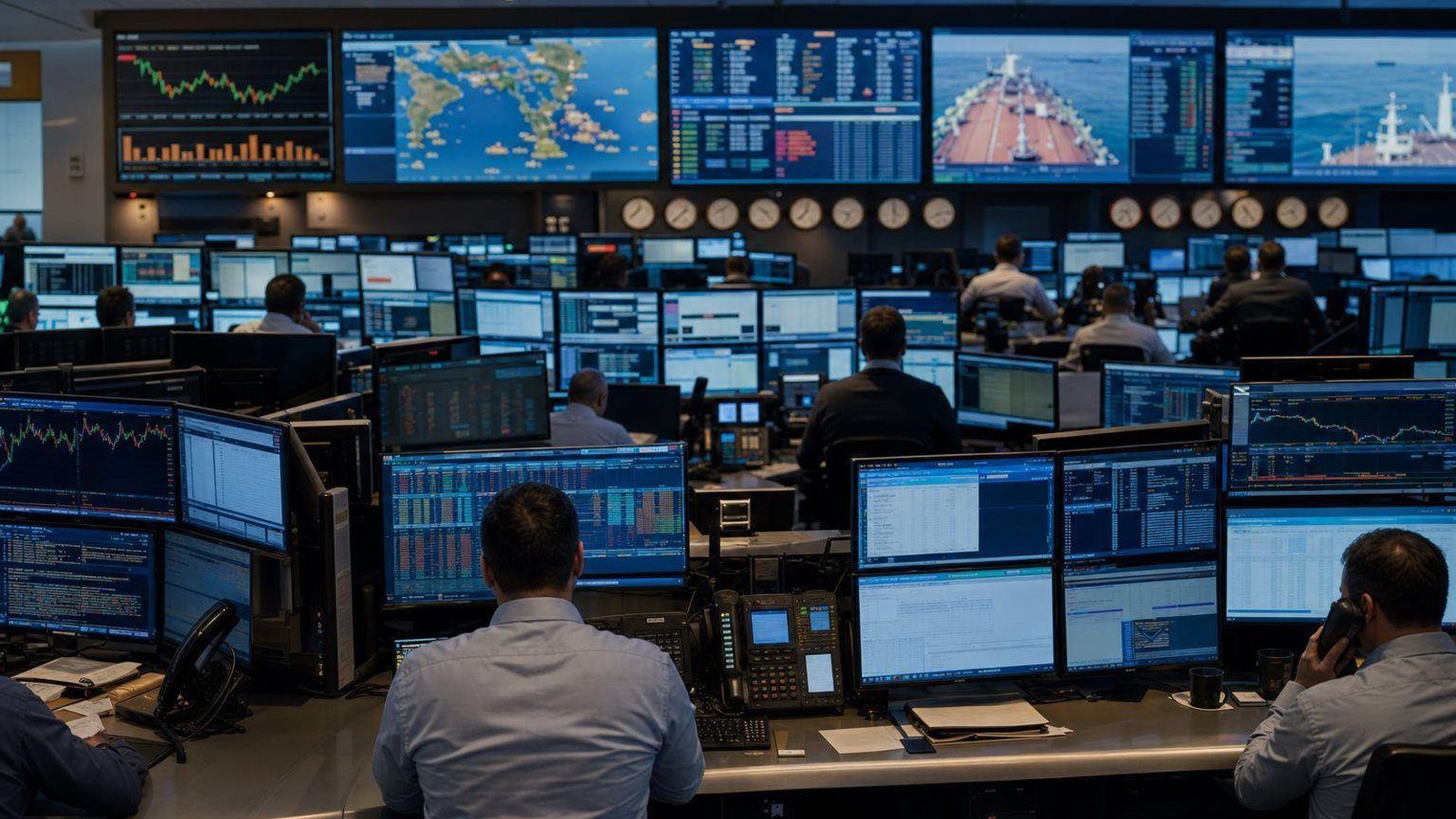
A physical trader makes money from the spread between places, times and qualities. Storage is how those spreads are captured. A tank lets a trader buy now and sell forward, combine off-spec components into an on-spec blend, or hold a cargo until the right buyer appears. The tank has to be available when the trade is, and flexible enough to change direction when the market does.
We know each inquiry may be one leg of a larger book. We quote quickly, keep positions confidential and structure terms around how the trade works. We also verify every counterparty before a barrel moves, because traders are a favorite target for fraudsters who use the language of storage to extract advance fees.
Optionality is the product
Most trading inquiries are about options rather than tanks: the option to hold, to blend, to switch grade or to exit by a different mode. We structure contracts with that in mind, from month-to-month bookings to longer terms with extension rights. Tank-Farm Availability shows which tanks are free, reserved or booked, with days and price, before you call.
- Short-notice bookings where tankage is free
- Segregated tanks for blending and quality plays
- Commingled storage for fungible grades at lower cost
- In-tank title transfer between verified parties
- Exit by tanker, barge, rail, truck or pipeline
Storage plays in contango
In contango, forward prices sit above prompt prices. A trader can buy prompt, store, and sell forward to lock in the spread. The trade works only if the spread covers the full cost of carry, and that is more than the storage fee. We break out every cost line so you can test the numbers against the curve.
When the curve flattens or flips into backwardation, where prompt prices exceed forward prices, the incentive reverses and stored barrels come out quickly. Contracts should anticipate that day, with notice periods, exit routes and loading slots agreed at the start rather than negotiated under pressure.
| Cost line | What drives it |
|---|---|
| Storage fee | Per barrel per month, usually take-or-pay on shell capacity |
| Throughput and handling | Receipts, deliveries, line fills and extra turns |
| Financing | Cargo value, interest rate and holding period |
| Insurance | Cargo value and the terms of your policy |
| Losses | Evaporation, measurement tolerance and unpumpable heel |
| Heating | Heavy grades only: product, season and target temperature |
| Inspection and testing | Inspector and laboratory fees at each movement |
Blending to specification
Blending turns components into saleable grades. Fuel oil is blended to the ISO 8217:2024 grade the buyer will accept, often a very low sulfur fuel oil at or below the 0.50% global sulfur cap. Gasoline is blended from components to the octane and vapor pressure limits of the destination market. We blend to your recipe, in tank or in line, and test the result before release.
The recipe and the margin stay yours. We report component volumes, as-blended quality and any deviation from target, so you know exactly what you own before you sell it, and the laboratory results travel with the product into the cargo documents.
Fast turnarounds at the berth
Time at the berth is money under the charter party. On ASBATANKVOY terms, laytime usually starts six hours after the vessel tenders a valid notice of readiness (NOR), or on berthing if sooner, and demurrage runs once laytime is used up. We shorten the turnaround by having the tank, the shore line and the documents ready before the ship arrives.
- Tank staged and sampled before the vessel berths
- Shore lines packed and ready to pump
- Inspector appointed and on site at arrival
- Documents drafted against the contract before loading ends
Confidentiality, credit and KYC
Stock levels, counterparties and blend recipes are shared only with you and with people you authorize in writing. A buyer you sell to in tank sees its own allocation in our portal, not your book. Credit is agreed to your standing, which can mean a letter of credit or a parent guarantee, and our agreements state plainly the warehouse lien a US storage operator holds for unpaid charges.
How it works
- 1Check availability
See free and reserved tanks, days and price on Tank-Farm Availability.
- 2Verify and contract
KYC, credit terms and a signed Tank Storage Agreement.
- 3Receive and measure
Custody transfer measured, sampled and booked to your account.
- 4Transfer or lift
In-tank transfer to a verified buyer, or loading onto the exit mode.
Frequently asked questions
What is an in-tank transfer?
An in-tank transfer moves title to stored product from one party to another without pumping it. The product stays in the tank and our inventory records change owner. We complete one only when both parties have passed KYC and the seller has instructed the transfer in writing.
Can you blend off-spec product?
Often, if the components are compatible and a realistic recipe exists. We review the components and the target specification first and tell you if the blend carries a stability or compatibility risk. Final quality is confirmed by laboratory testing, not by calculation alone.
Do you share our stock levels with anyone?
No. Stock levels, movements and counterparties are confidential. We disclose them only to you, to parties you authorize in writing, to the inspector appointed for a movement, or where the law requires it.
How fast can a first-time counterparty start storing?
As fast as verification allows. Commercial terms can be agreed in parallel, but no tank is allocated until KYC is complete and the Tank Storage Agreement is signed. Sending complete company and ownership documents at the start is the quickest route.
Related
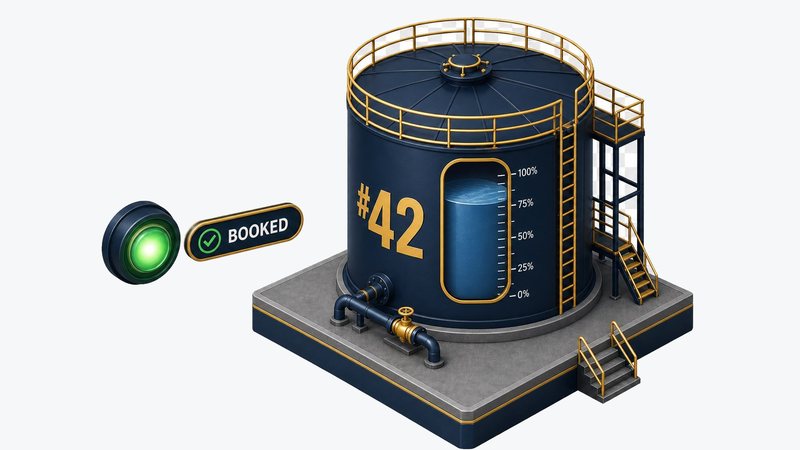
Tank-Farm Availability
Which tanks are free, reserved or booked, with days and price, and each tank farm on a map.
Read more
Blending & Additization
In-tank and inline blending and additive injection, verified by ASTM testing before release.
Read more
Tank Leasing: How Storage Deals Work
Dedicated or commingled, take-or-pay or throughput: how tank leases are priced and what to check.
Read more
Chartering Desk
Voyage, time charter and COA fixtures, Worldscale freight, laytime and demurrage handled end to end.
Read moreSee what is free now
Check live tank status, then send us the grade, volume and period. We confirm terms once verification is under way.