


Conveyance Types
Every tracking link names the conveyance carrying the cargo. This is the full list the terminal chooses from, with a one-line description of each, from ULCC to pipeline.
When the terminal sets up or updates a tracking link, it ticks the conveyance that carries the cargo on that leg. The tick does two things. It tells the reader exactly what is moving their product, in standard industry terms, and it sets the symbol shown on the map: a tanker, a barge, a railcar, a truck or a pipeline.
A cargo that changes mode, for example by rail into a terminal and then by barge out, can show a different conveyance on each leg. The tables below list every type, grouped by mode. Tanker size bands are market conventions, and brokers draw the lines slightly differently, so treat the figures as typical ranges rather than fixed limits.
Marine: crude and product tankers
Ocean-going tankers are grouped by deadweight tonnage (DWT), the total weight a ship can carry, including cargo, fuel, water and stores. Crude moves on the larger classes and refined products on coated clean tankers. Every class in this table shows the tanker symbol on the map.
| Type | Approx. DWT | Description |
|---|---|---|
| ULCC | 320,000+ | Ultra large crude carrier for the longest crude hauls |
| VLCC | 200,000-320,000 | Very large crude carrier, about 2 million bbl of crude |
| Suezmax | 120,000-200,000 | About 1 million bbl, sized around Suez Canal limits |
| Aframax | 80,000-120,000 | Medium-haul crude and fuel oil; common lightering ship |
| LR2 | 80,000-160,000 | Long range clean tanker for naphtha, jet and diesel |
| LR1 / Panamax | 55,000-80,000 | Product or crude tanker sized to the original Panama Canal locks |
| MR (MR1 / MR2) | 25,000-55,000 | Medium range product tanker, the core of the clean trade |
| Handysize / GP | 10,000-30,000 | Smaller product and chemical tanker for regional trades |
Marine: specialist and offshore
Some ships are defined by their job rather than their size. Chemical tankers are classed by the hazard of their cargoes under the IMO International Bulk Chemical (IBC) Code, and offshore units may stay moored at one location for years. A link can name these types precisely, so a receiver knows what will arrive at the berth.
| Type | Description |
|---|---|
| Coastal tanker | Small tanker on short-sea and coastal routes into shallow terminals |
| Bunker tanker | Delivers marine fuel to ships in port or at anchor |
| Chemical / parcel tanker | IMO Type 1, 2 or 3 ship carrying many segregated grades at once |
| Shuttle tanker | Dynamic-positioning tanker that bow-loads crude at offshore fields |
| FSO | Floating storage and offloading unit moored at a field or terminal |
| FPSO | Floating production, storage and offloading unit that processes and stores crude |
| LPG carrier | Pressurized or refrigerated ship for propane, butane and other liquefied gases |
Barge
A tank barge has no engine of its own. Inland barges travel in tows pushed by a towboat; seagoing barges are towed on a hawser or pushed by a tug locked into the stern. All barge types show the barge symbol on the map, and naming the exact type tells the receiving dock what to expect alongside.
| Type | Description |
|---|---|
| Inland tank barge, 10,000 bbl | Standard smaller river unit, pushed in a tow |
| Inland tank barge, 30,000 bbl | Standard larger unit on the Intracoastal and Lower Mississippi |
| Heated barge | Insulated barge with heating for asphalt and heavy oils |
| Chemical barge | Coated or stainless tanks for chemicals and specialty liquids |
| Bunker barge | Delivers marine fuel alongside ships in port |
| Ocean barge | Seagoing barge towed on a hawser by an ocean tug |
| ATB | Articulated tug-barge: tug pinned into a notch in the barge stern |
| ITB | Integrated tug-barge: tug rigidly locked in, sailing as one unit |
Rail
Rail entries cover both the car and the way it moves: the tank car specification, which matters for safety rules and unloading equipment, and the service pattern, which matters for timing. All rail entries show the railcar symbol, whether the cargo is one car or a unit train.
| Type | Description |
|---|---|
| DOT-117 tank car | Current tank car for flammable liquids, about 30,000 gallons |
| DOT-117R tank car | Older car retrofitted to the DOT-117 performance standard |
| Pressure tank car | DOT-112 or DOT-114 car for LPG and other liquefied gases |
| Coiled and insulated car | Car with heating coils for asphalt, heavy oils and fats |
| General service tank car | Non-pressure car for liquids outside flammable service, such as vegetable oils |
| Unit train | A full train of one product from one origin to one destination |
| Manifest movement | Single cars or small blocks moving in mixed freight trains |
| Transload | Transfer between rail and truck, barge or tank at a track-side site |
Road
Road entries follow the US Department of Transportation cargo tank specifications, plus the containers that move by road as part of a longer journey. The specification tells a receiver what the tank was built to carry and how it will connect at the dock. All road entries show the truck symbol on the map.
| Type | Description |
|---|---|
| DOT-406 / MC-306 cargo tank | Multi-compartment trailer for gasoline, diesel and jet fuel |
| DOT-407 / MC-307 cargo tank | Higher-pressure tank for chemicals and some flammable liquids |
| DOT-412 / MC-312 cargo tank | Tank for corrosive liquids such as acids |
| MC-331 cargo tank | Pressure tank for propane, butane and other liquefied gases |
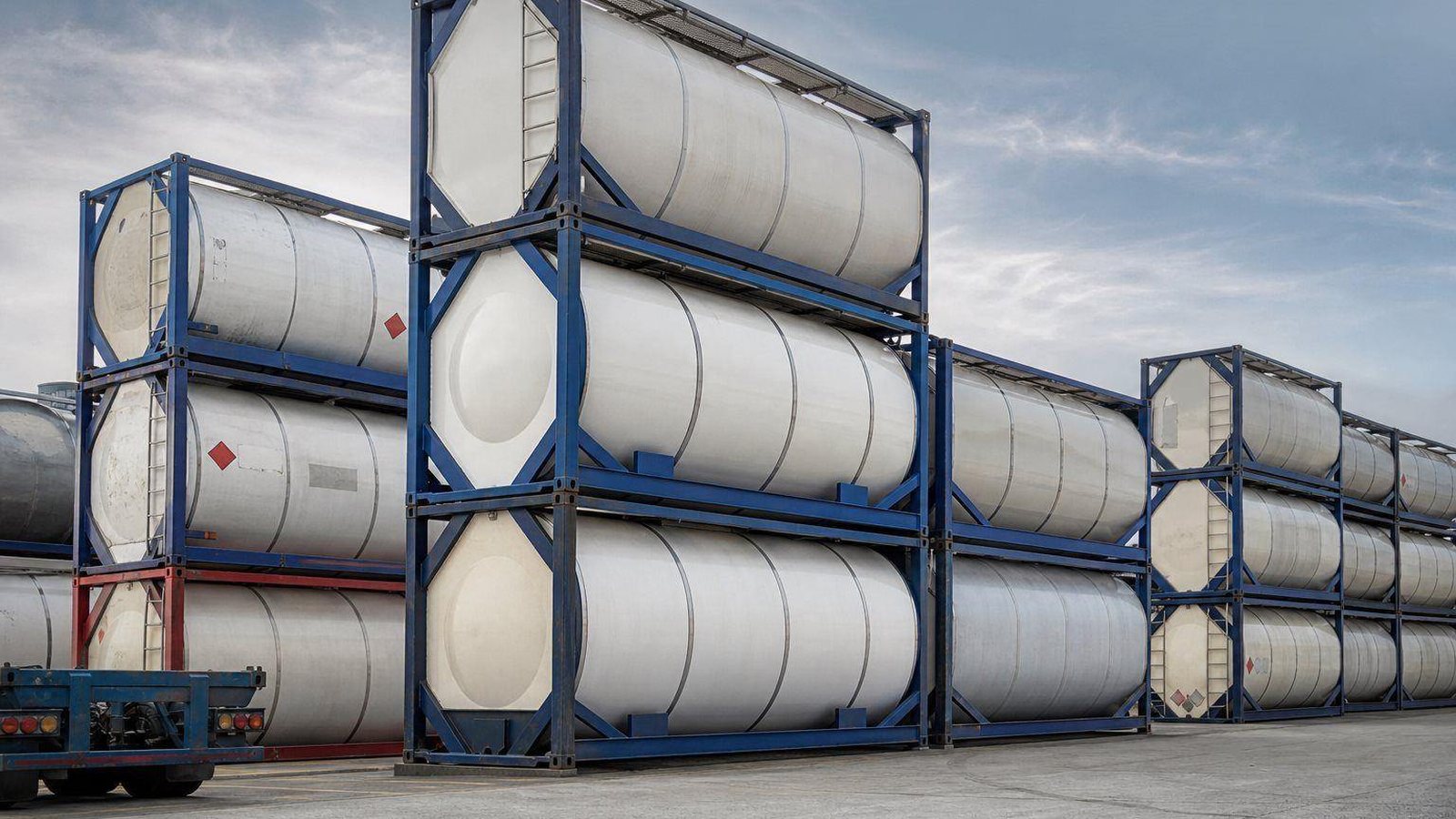
| ISO tank container | Tank in a 20-ft frame that moves by road, rail and sea |
| Heated or insulated trailer | Keeps asphalt and heavy oils above pumping temperature |
| Flexitank | Single-use bladder in a dry container for non-hazardous liquids such as vegetable oils |
Pipeline
A pipeline batch is not a vehicle, so its milestones follow nominations, metered receipts and metered deliveries rather than voyages. Pipeline legs show the pipeline symbol on the map. Naming the type of line helps a receiver understand the batch size, the cycle and how the product will be measured on arrival.
| Type | Description |
|---|---|
| Crude trunk line | Long-distance line carrying crude from hubs to refineries or export terminals |
| Refined products line | Batched line carrying gasoline, diesel and jet fuel in sequence |
| Gathering line | Smaller line collecting crude from production sites |
| NGL line | Line carrying natural gas liquids to fractionation or storage |
| Terminal transfer line | Line moving product between tanks or between neighboring terminals |
| Dock line | Line from shore tanks to a marine berth for ship and barge loading |
Frequently asked questions
Why does my link show a barge when the cargo was sold on a tanker?
Cargo often moves on more than one conveyance. A product sold FOB on a tanker may first reach the load terminal by barge, rail or pipeline. Each leg is labeled with its own conveyance, so the symbol on the map reflects the leg it marks.
What is deadweight tonnage?
Deadweight (DWT) is the total weight a ship can carry: cargo, fuel, fresh water, stores and crew. Cargo capacity is therefore somewhat less than DWT. Size classes such as Aframax or VLCC are defined by DWT ranges, which brokers apply with slight variations.
Who chooses the conveyance on my link?
The terminal does, when it sets up or updates the tracking link. It ticks one conveyance per leg from this list, and the tick sets the symbol on the map. If a link seems to name the wrong conveyance, contact us and we check it against the movement records.
Related
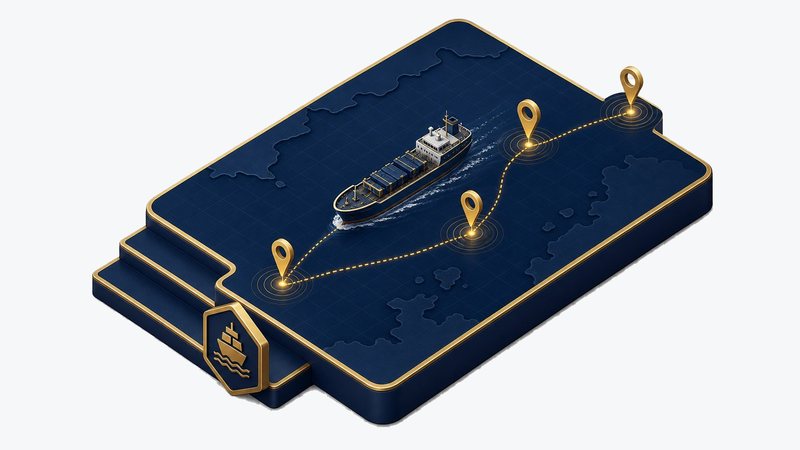
Cargo & Vessel Tracking
Every waypoint on a map, A to Z, with a plain-language status from nomination to custody transfer.
Read more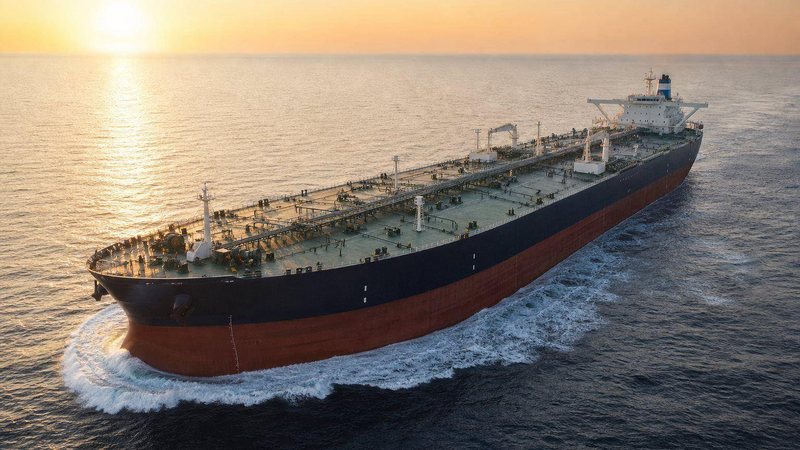
Marine Tanker Freight
Tanker size classes, SIRE 2.0 vetting and Jones Act rules, matched to your parcel and both berths.
Read more
Tanker and Conveyance Sizes
MR to VLCC, barges, ATBs, rail cars and trucks: typical sizes and what they carry.
Read more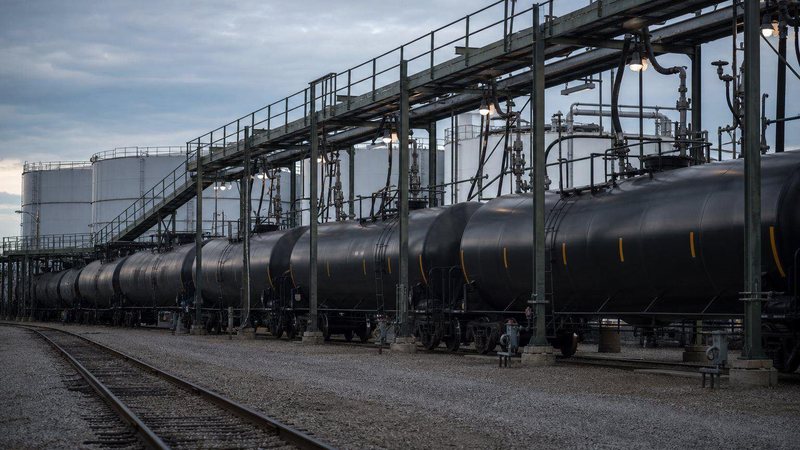
Rail Tank Car Transport
DOT-117 tank cars, unit trains, manifest service and transloading for crude, products and renewables.
Read moreTrack a cargo
Enter your tracking number to see the conveyance, its map symbol and every waypoint.