


Laytime and Demurrage, Explained
Laytime is the time a charterer may use to load and discharge without paying extra. Demurrage is what it pays when that time runs out. Both are fixed in the charter party, and both are easily lost on paperwork.
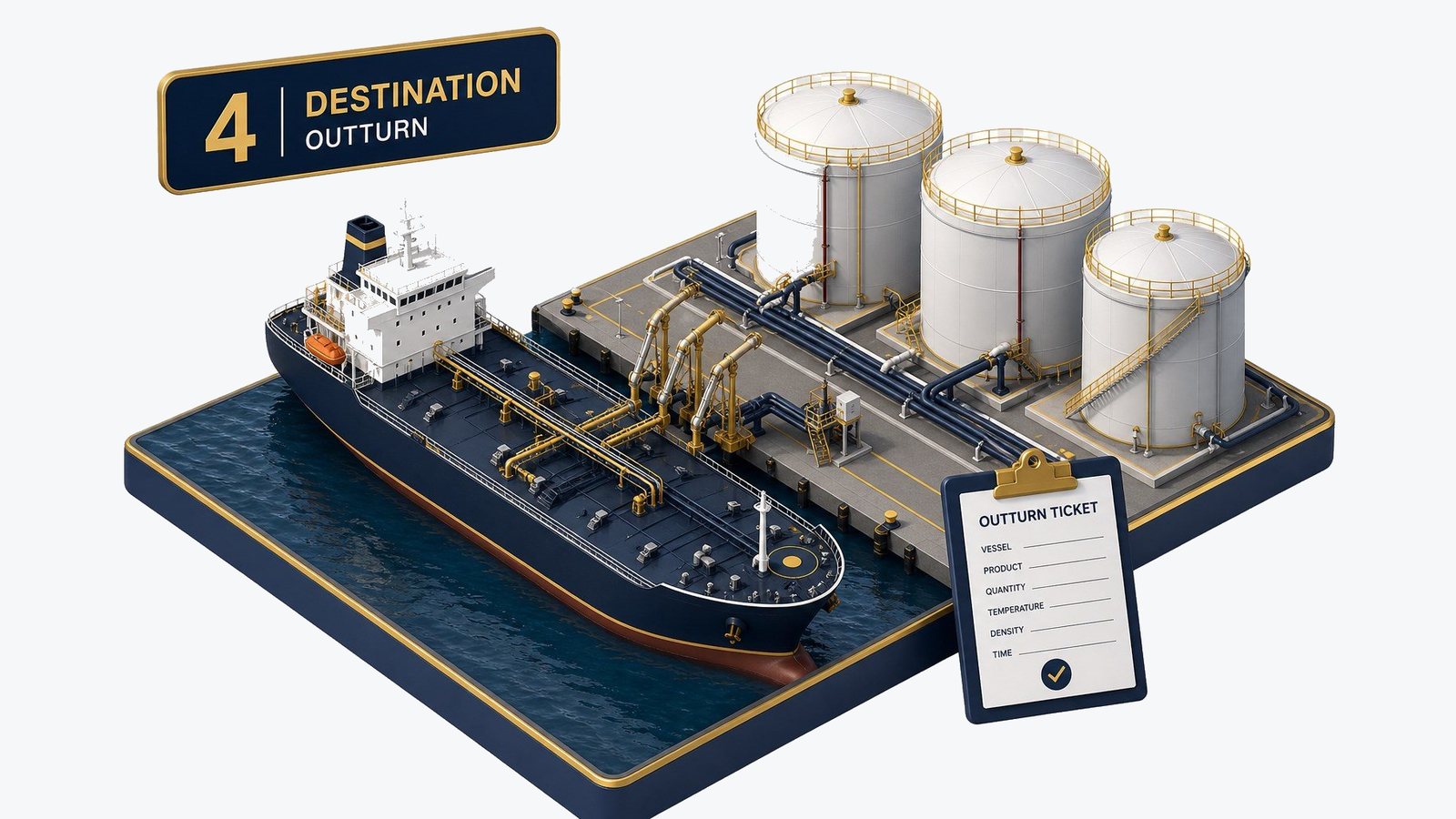
Every voyage charter gives the charterer a fixed allowance of time, called laytime, to load and discharge the cargo. If the ship is kept longer, the charterer pays the owner demurrage at a daily rate, pro rata for part days. On tankers the sums matter: a few days at anchor waiting for a berth can produce a claim as large as a difference in freight.
Most tanker voyage charters are built on a standard form, most often ASBATANKVOY or an oil-company form such as Shellvoy or BPVOY, amended by a rider of additional clauses. This guide uses ASBATANKVOY wording to show the mechanics. Your charter party and its rider always govern, and riders frequently change the defaults described here.
The vocabulary
Tanker laytime is normally reversible, meaning load and discharge time are pooled, and counted in running hours SHINC (Sundays and holidays included). Dry-cargo charters carry more weekday and weather exceptions, but the principles are the same. These are the terms you will meet in any laytime statement.
| Term | Meaning |
|---|---|
| Laycan | Laydays and cancelling: the window in which the ship must present at the load port; if it arrives after the cancelling date, the charterer may cancel |
| NOR | Notice of readiness: the master's notice that the ship has arrived and is ready in all respects to load or discharge |
| Laytime | The time allowed for cargo operations, expressed in running hours on most tanker charters |
| Demurrage | Liquidated damages for exceeding laytime, at the daily rate in the charter, pro rata |
| Despatch | Payment for finishing early; common in dry bulk, rare in tanker charters |
| Statement of facts | The port record of times and events, signed by master and agent, from which laytime is calculated |
When the clock starts and stops
Under ASBATANKVOY the master tenders NOR on arrival at the customary anchorage, berth or no berth. Laytime starts six hours after NOR is received, or when the ship is all fast in berth, whichever happens first. Time spent shifting from anchorage to berth does not count. On tanker forms, laytime, or demurrage once laytime is used up, normally runs until the hoses are disconnected.
An NOR is valid only if the ship has genuinely arrived and is ready. Notice tendered before arrival, or while the ship cannot yet work cargo, is a classic source of dispute, and the outcome can turn on the governing law and the exact wording of the charter.
- Usually excluded: shifting from anchorage to berth, ship breakdowns and other ship-caused delays
- Usually excluded: time for the owner's own purposes, such as bunkering, unless cargo work continues alongside
- Usually counted: waiting for a berth once laytime has started, and shore-side delays or restricted receiving rates
- Half-rate demurrage under ASBATANKVOY: delay from fire, explosion, storm, strikes or breakdown of shore plant
Worked example: a demurrage claim
The voyage below is hypothetical. It assumes ASBATANKVOY-style terms with 72 hours of reversible laytime and a demurrage rate of $40,000 per day pro rata, chosen only to make the arithmetic clear. A real claim needs the statement of facts, NOR, pumping logs and port records behind every line.
| Event | Time | Hours counted |
|---|---|---|
| Load port: NOR tendered at anchorage | Day 1, 06:00 | - |
| Laytime starts: NOR plus 6 hours, ship not yet berthed | Day 1, 12:00 | - |
| Shifting anchorage to berth, excluded | Day 1, 14:00 to 16:30 | minus 2.5 |
| Hoses disconnected after loading | Day 2, 20:00 | 29.5 of 32.0 elapsed |
| Discharge port: NOR 08:00, all fast 11:00, laytime starts | Day 9, 11:00 | - |
| Ship's cargo pump breakdown, excluded | Day 10, 4 hours | minus 4.0 |
| Hoses disconnected after discharge | Day 11, 23:00 | 56.0 of 60.0 elapsed |
| Total used 85.5 h against 72.0 h allowed | Excess 13.5 h | $22,500 demurrage |
Demurrage in the sale contract
The party that chartered the ship pays or collects demurrage under the charter party. The sale contract then usually passes the exposure along. Under FOB the buyer charters, so it claims load-port demurrage from the seller; under CFR or CIF the seller charters and claims discharge-port demurrage from the buyer. If the sale-contract laytime terms differ from the charter party, one party carries the gap.
Back-to-back clauses, which copy the charter-party laytime, notice rules and demurrage rate into the sale contract, narrow that gap. They work only if the documents, deadlines and time bars line up as well, so that a claim accepted under the charter party can be passed on in full rather than in part.
Claims and time bars
Many charter parties and riders set a time bar for demurrage claims, often 90 days from completion of discharge, together with a list of documents that must be submitted within it. Miss the deadline or leave out a required document and an otherwise sound claim can fail. Sale contracts frequently set their own deadlines, sometimes shorter than the charter party allows.
Frequently asked questions
Does a storm stop demurrage?
Not automatically. Once a ship is on demurrage, time generally keeps running unless the charter party expressly excludes the cause, which is summed up as "once on demurrage, always on demurrage". Under ASBATANKVOY, demurrage caused by storm is charged at half rate rather than stopped.
Is there despatch on tanker charters?
Rarely. Standard tanker forms such as ASBATANKVOY make no provision for despatch, so finishing early earns the charterer nothing beyond the time saved. Dry-bulk charters, by contrast, commonly pay despatch, often at half the demurrage rate.
What is a pumping warranty?
The owner's promise about the ship's discharge performance, commonly to discharge the full cargo within 24 hours or to maintain 100 psi at the ship's manifold, provided the shore facilities allow it. Time lost because the ship pumped below the warranty can be deducted from laytime or demurrage.
Who pays when a terminal causes the delay?
Under the charter party the charterer still pays the owner. Whether the charterer can then recover from the terminal, or from its counterparty in the sale, depends on the terminal agreement and the sale contract. That is why laytime terms should be aligned across all three documents.
Related

Chartering Desk
Voyage, time charter and COA fixtures, Worldscale freight, laytime and demurrage handled end to end.
Read more
Marine Tanker Freight
Tanker size classes, SIRE 2.0 vetting and Jones Act rules, matched to your parcel and both berths.
Read more
Incoterms 2020 for Bulk Liquids
FOB, CFR, CIF and DAP for liquid cargoes, risk on board, and what replaced DES.
Read more
Tanker and Conveyance Sizes
MR to VLCC, barges, ATBs, rail cars and trucks: typical sizes and what they carry.
Read morePlanning a voyage with tight laytime?
Our chartering desk can check berth windows, receiving rates and charter-party terms before you fix.