


Renewables & Biofuels Storage
Ethanol, biodiesel, renewable diesel and SAF each fail in storage in their own way. We store them to suit, and keep the records your sustainability claims depend on.
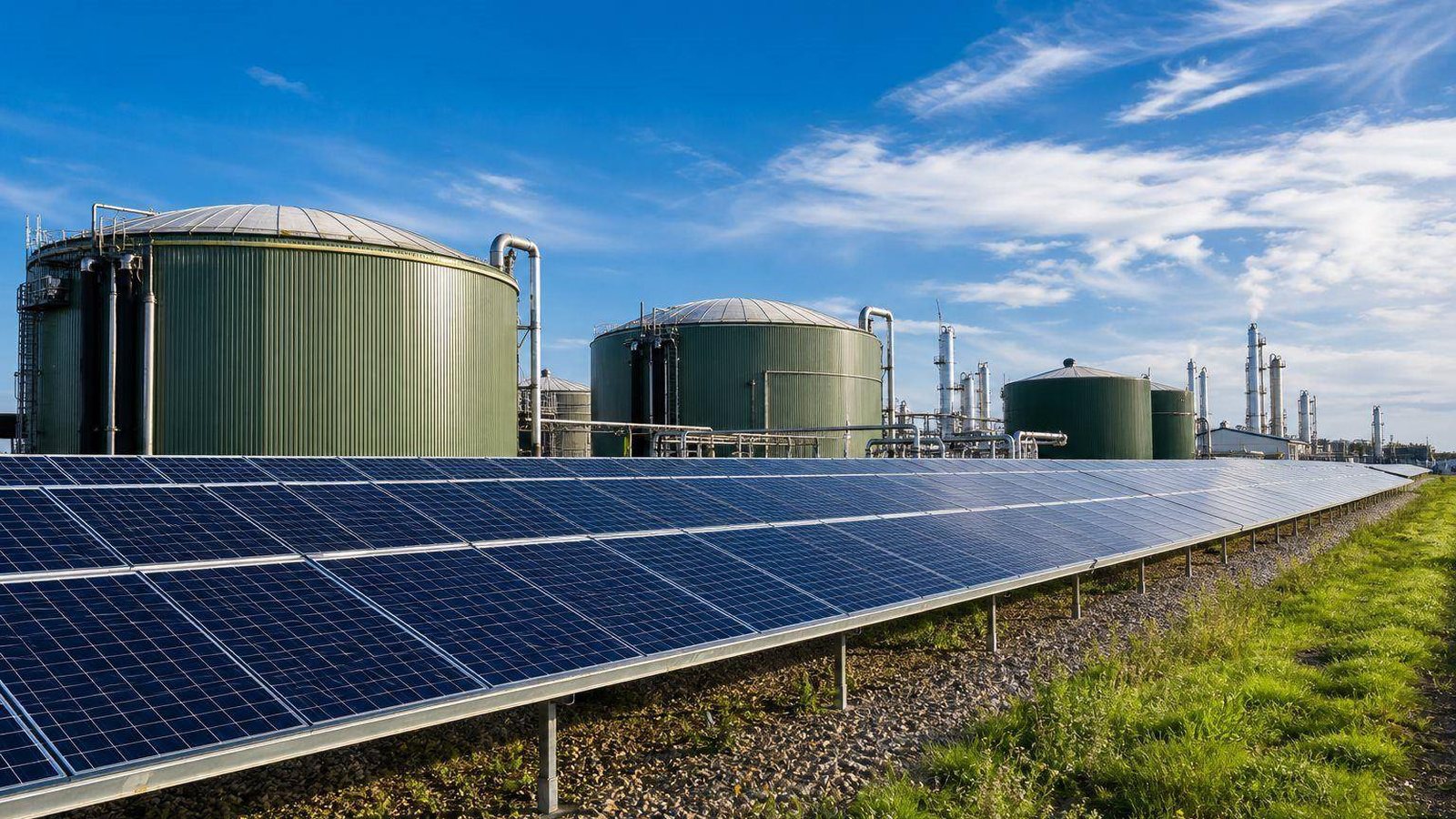
Renewable fuels look like petroleum products on a bill of lading, but they do not behave like them in a tank. Ethanol pulls water from the air. FAME biodiesel clouds and gels at temperatures diesel handles easily, oxidizes over time and feeds microbes at the water interface. Renewable diesel and SAF are more stable, but their value depends on a paper trail that must stay unbroken from producer to blender.
We store each product on its own system, control water and temperature, and keep inventory and transfer records in a form that supports your ISCC mass-balance claims, RIN reporting and state low-carbon fuel programs. Our role is to hold the product and the evidence; the claims remain yours. Where a product needs heat in winter or a dry blanket all year, that is agreed and priced up front.
Product by product
Ethanol is fully miscible with water, and gasoline-ethanol blend that takes on too much water separates into a water-ethanol layer at the tank bottom. FAME starts forming wax crystals at its cloud point, which depends heavily on feedstock: methyl esters from tallow or palm oil cloud at higher temperatures than esters from soybean or canola oil.
| Product | Specification | Main storage risk | How we manage it |
|---|---|---|---|
| Fuel ethanol | ASTM D4806 | Water pick-up; stress corrosion cracking of steel | Internal floating roof; dry systems; inspection guided by API RP 939-E |
| FAME biodiesel (B100) | ASTM D6751 / EN 14214 | Cold flow, oxidation, microbial growth | Heated, insulated tanks; scheduled water draws; stability testing |
| Renewable diesel (HVO) | ASTM D975 / EN 15940 | Low conductivity; lower density than fossil diesel | Dedicated or ULSD-compatible system; conductivity additive where needed |
| SAF synthetic component | ASTM D7566 annexes | Not jet fuel until blended and certified | Segregated from finished jet until blending |
Cold flow and water
We store B100 in heated, insulated tanks through the cold season and hold it above its cloud point with a margin, because some precipitates that form in cold storage do not redissolve on warming. Saturated monoglycerides and sterol glucosides are the usual culprits, which is why ASTM D6751 includes a cold soak filtration test.
- Tank bottoms drained of water on a set schedule and logged
- Desiccant breathers or blanketing where moisture pick-up matters
- Microbial testing where water and biodiesel meet
- Oxidation stability tested on long-held FAME before release
Records that support ISCC and RIN reporting
Under the Renewable Fuel Standard (40 CFR Part 80, Subpart M), RINs generally stay attached to renewable fuel until it is blended, exported or acquired by an obligated party, and product transfer documents must carry the required RIN information. Under ISCC mass balance, every site in the chain records what came in, what went out and which sustainability data moved with it.
We keep receipt, transfer and inventory records that support your ISCC claims and RIN reporting: volumes at standard temperature, dates, tanks, counterparties and the documents received with each parcel. Scheme rules differ on whether a storage site needs its own certificate, so we confirm the position for each scheme with you before the first receipt.
Renewable diesel and SAF
Renewable diesel, also called HVO, is a paraffinic fuel made by hydrotreating fats and oils. It meets ASTM D975 and can be blended with petroleum diesel at any ratio while the blend stays on specification. Its lower density changes the barrels-to-tons conversion, so we measure and report it on its own density rather than a diesel average.
SAF components approved under ASTM D7566 can be blended with conventional jet fuel, up to 50 percent for most approved pathways. Until it is blended and certified, neat SAF is not jet fuel, so we keep it apart from finished jet and from other renewables. Once certified to D7566, the blend is handled as ASTM D1655 jet fuel.
Frequently asked questions
Do you generate or hold RINs?
No. RINs belong to the parties in your supply chain. We hold the product, keep records that support your RIN reporting and provide the movement data your product transfer documents need, as the product owner instructs.
Can biodiesel and ULSD share a tank?
Blends such as B5 or B20 can be made in tank or at the rack, within ASTM D975 or D7467. FAME never goes into tanks or lines that serve jet fuel, and a tank that has held FAME needs cleaning before any return to jet service.
How long can FAME stay in storage?
It depends on feedstock, antioxidant treatment and conditions. FAME oxidizes over months, so for long holds we test oxidation stability before release and recommend antioxidant dosing at receipt where the owner agrees.
Can you blend SAF into jet fuel?
Where the tankage and jet handling are in place, we blend a D7566 synthetic component with conventional jet to the owner's ratio and have the blend tested and certified before it is released as jet fuel.
Related
Biofuel and Renewable Fuel Producers
Renewable feedstocks and biofuels stored and moved with chain-of-custody records kept to audit standard.
Read more
Sustainability at the Terminal
Vapor control, leak detection, energy use and renewable-fuel handling, described as practice, not targets.
Read more
Vegetable Oil Storage
Food-grade tankage, previous-cargo control and gentle heating for edible and technical oils.
Read more
Tank & Line Heating
Steam, thermal oil and heat tracing for viscous products, with logged temperatures and clear pricing.
Read moreMoving renewable volumes?
Tell us the product, feedstock, volumes and the schemes you report under. We will set out storage and record-keeping.