


Rotterdam, Netherlands
Europe's largest port and its main crude gateway. We arrange crude and product tankage, freight and inspection in Rotterdam.
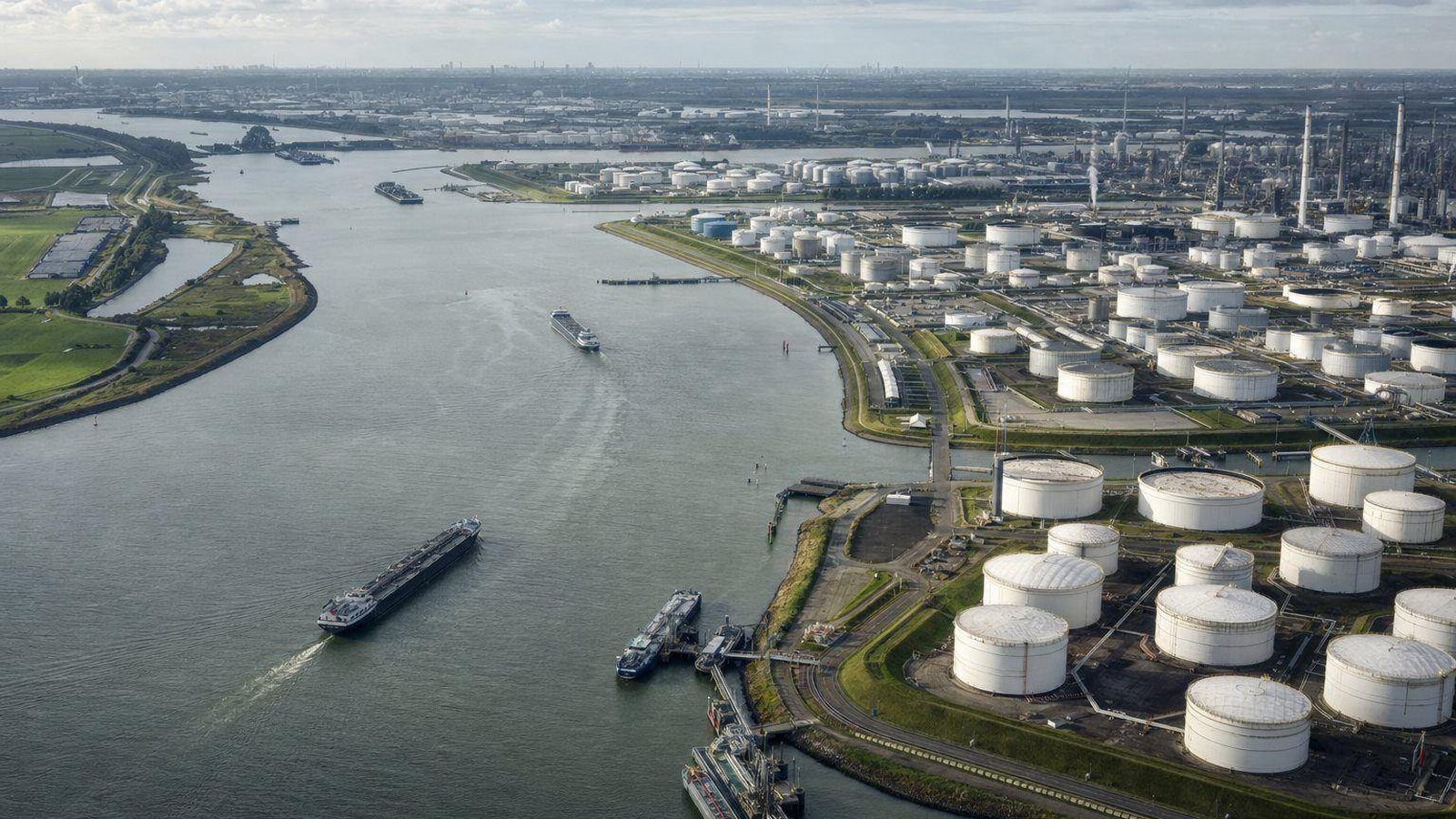
Rotterdam handles 95 to 100 million tonnes of crude a year, more than any other European port. Its crude terminals on Europoort and Maasvlakte sit directly on deep water with no locks or tides, so supertankers berth fully laden.
About half of Rotterdam's crude is refined in the port, and the rest is piped to refineries in Vlissingen, Antwerp and Germany. Price reporting agencies base Northwest European oil product benchmarks on trade in Rotterdam. We arrange tankage, freight and inspection.
Refineries and terminals
Refineries in the port are run by BP, ExxonMobil, Shell and Vitol. Independent tank storage for oil products alone is about 7.5 million cubic metres at more than 20 terminal locations, including Vopak.
- Crude and product tankage
- Supertanker discharge and onward pipeline scheduling
- Barge distribution on the Rhine
- Independent inspection at each custody transfer
Rotterdam and ARA
Rotterdam is the largest of the Amsterdam–Rotterdam–Antwerp (ARA) ports that together form Europe's main oil storage and trading area. The Port of Rotterdam Authority is owned by the city and the Dutch state.
Frequently asked questions
Why is Rotterdam the price reference?
Price reporting agencies base Northwest European oil product benchmarks on physical trade in Rotterdam.
Can VLCCs and ULCCs berth fully laden?
Yes. The crude terminals sit on deep water with no locks or tides, and tankers up to 500,000 DWT are accommodated.
Where does Rotterdam's crude go?
About half is refined in the port. The rest is piped to refineries in Vlissingen, Antwerp and Germany.
Related
ARA: Amsterdam-Rotterdam-Antwerp
Storage, blending and Rhine barging across Amsterdam, Rotterdam and Antwerp.
Read moreAmsterdam, Netherlands
Gasoline blending for Eurobob barges and jet fuel for Schiphol airport.
Read moreAntwerp-Bruges, Belgium
A pipeline-linked chemicals cluster in Antwerp and LNG at Zeebrugge.
Read more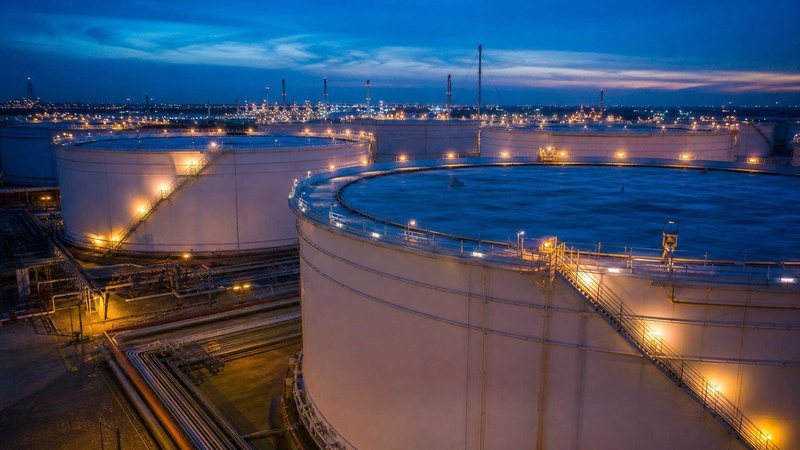
Crude Oil Storage
Floating-roof tankage, grade segregation, H2S control and blending to refinery spec.
Read moreStore in Rotterdam
Send product, volume and timing. We will propose tankage, freight and inspection in Rotterdam.